When pressure builds up in pipes, tanks, or machines, something needs to let it out before things break or explode. That’s where an adjustable relief valve comes in. Think of it as a safety guard that opens when pressure gets too high, keeping your system safe.
For complete selection guidelines and cross-reference documentation on this product line, please consult our pressure control valve troubleshooting and specs.
What Is an Adjustable Relief Valve?
An adjustable relief valve (part of pressure control valve systems) is a safety device that automatically opens when system pressure reaches a dangerous level. The “adjustable” part means you can change the pressure setting without taking the valve apart.
These valves are like automatic pressure release buttons. When pressure hits your set limit, the valve opens to let some fluid out. When pressure drops back to safe levels, it closes again.
Why Do You Need Pressure Control?
Without pressure control, bad things can happen:
- Equipment breaks down
- Pipes burst
- Explosions or fires
- Workers get hurt
- Production stops
An adjustable relief valve prevents these problems by acting as your system’s last line of defense.
How Does an Adjustable Relief Valve Work?
The basic idea is simple: it’s all about balance. Inside the valve, there’s a spring pushing down on a disc (called a poppet). System pressure pushes up against this disc.
Here’s what happens:
- Normal operation: Spring force is stronger than system pressure, so the valve stays closed
- Pressure rises: When system pressure gets strong enough, it pushes the disc up against the spring
- Valve opens: Fluid flows out, reducing pressure
- Valve closes: When pressure drops, the spring pushes the disc back down
The Adjustment Feature
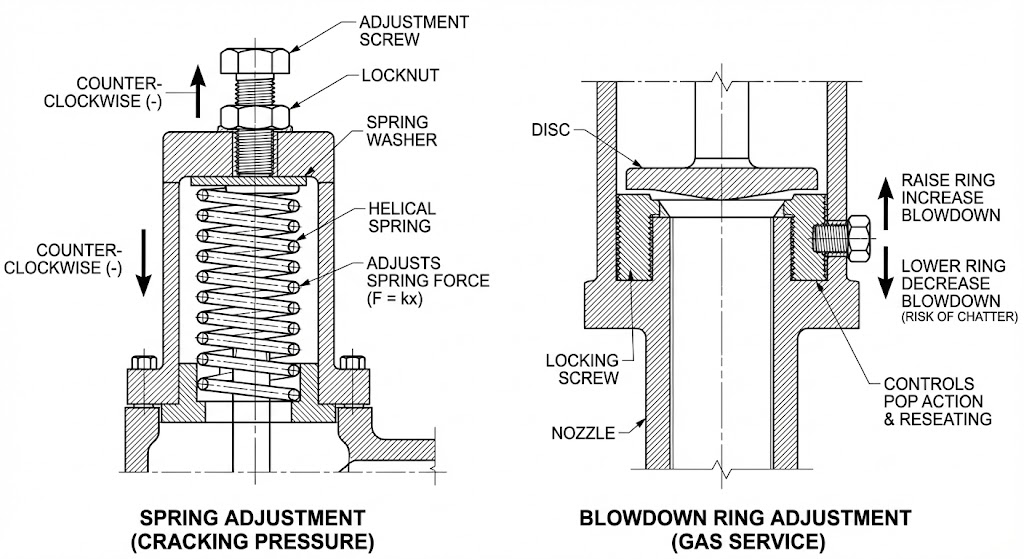
What makes these valves special is the adjustment screw or wheel on top. By turning it:
- Clockwise = More spring pressure = Higher opening pressure
- Counterclockwise = Less spring pressure = Lower opening pressure
This lets you set the exact pressure where you want the valve to open.
Types of Adjustable Relief Valves
There are two main types, each with different strengths:
Direct-Acting Relief Valves
These are the simple ones. System pressure works directly against the spring. [Compare with safety relief valve types]
Good points:
- Very fast response (2-10 milliseconds)
- Simple design means fewer parts to break
- Lower cost
- Great for emergency protection
Not so good:
- Pressure varies more as flow changes
- Can be noisy and vibrate
- Limited to smaller flow rates
Pilot-Operated Relief Valves (PORV)
These use a small “pilot valve” to control a bigger main valve. It’s like having a small valve tell a big valve what to do.
Good points:
- Very accurate pressure control
- Can handle huge flow rates
- Quieter operation
- Almost zero leakage when closed
Not so good:
- More complex (more parts to maintain)
- Slower response time
- Higher cost
- Sensitive to dirt
Key Terms You Should Know
Understanding these terms will help you choose and use relief valves better:
- Set Pressure: The pressure where the valve starts to open (this is what you adjust)
- Overpressure: How much extra pressure is needed to fully open the valve
- Blowdown: The difference between opening pressure and closing pressure
- Back Pressure: Pressure on the outlet side that can affect valve operation
Choosing the Right Adjustable Relief Valve
Picking the right valve involves several important factors:
1. System Requirements
- Maximum working pressure
- Type of fluid (water, oil, gas, chemicals)
- Temperature range
- Flow rate needed
2. Valve Type Decision
Choose Direct-Acting If You Need:
- Fast emergency protection
- Simple, reliable operation
- Lower cost
- Smaller flow rates
Choose Pilot-Operated If You Need:
- Precise pressure control
- Large flow capacity
- Quiet operation
- Minimal leakage
3. Size Calculation
Don’t just match your pipe size! You need to calculate the valve size based on:
- Maximum flow that needs to be relieved
- Pressure drop through the valve
- Properties of your fluid
Common Applications
Adjustable relief valves protect equipment in many industries:
Hydraulic Systems
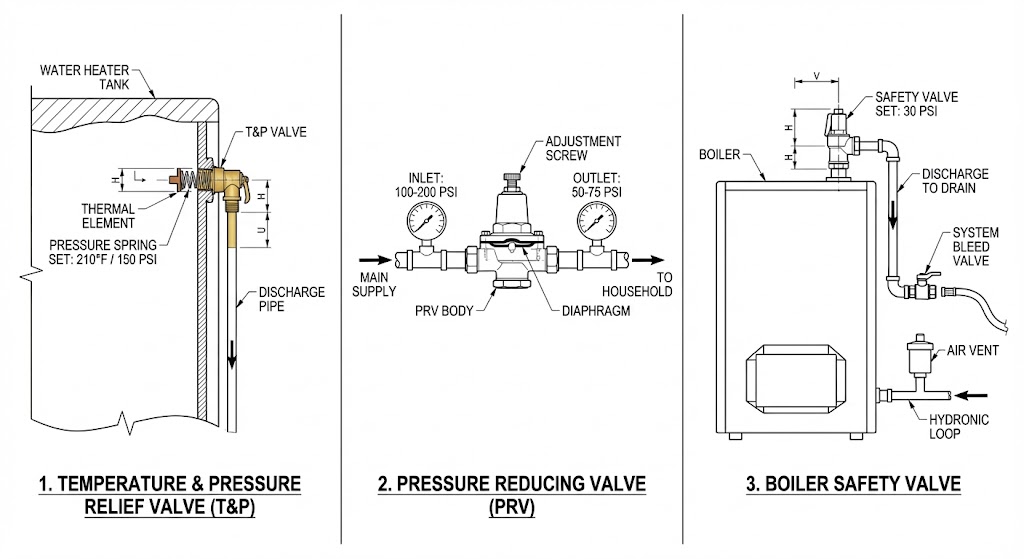
(For home applications, see our 8 bar PRV guide)
- Protect pumps and cylinders from overpressure
- Allow pressure adjustment for different operations
- Provide emergency shutdown capability
Compressed Air Systems
- Protect air tanks and compressors
- Maintain safe working pressures
- Prevent equipment damage from pressure spikes
Process Industries
- Protect reactors and storage tanks
- Handle thermal expansion in pipes
- Provide overpressure protection during upset conditions
Fire Protection Systems
- Maintain proper sprinkler system pressure
- Protect against water hammer
- Ensure reliable operation during emergencies
Installation Tips
Proper installation is crucial for safety and performance:
Location Matters
- Install as close as possible to protected equipment
- Avoid long pipes between the valve and equipment
- Make sure there’s enough space for maintenance
Piping Guidelines
- Use short, straight runs to the valve inlet
- Size outlet piping to handle full valve capacity
- Support piping to prevent vibration
Safety Considerations
- Never plug or block a relief valve
- Discharge should go to a safe location
- Follow local codes and regulations
Maintenance and Troubleshooting
Regular maintenance keeps your adjustable relief valve working properly:
Common Problems and Solutions
| Problem | Possible Cause | Solution |
|---|---|---|
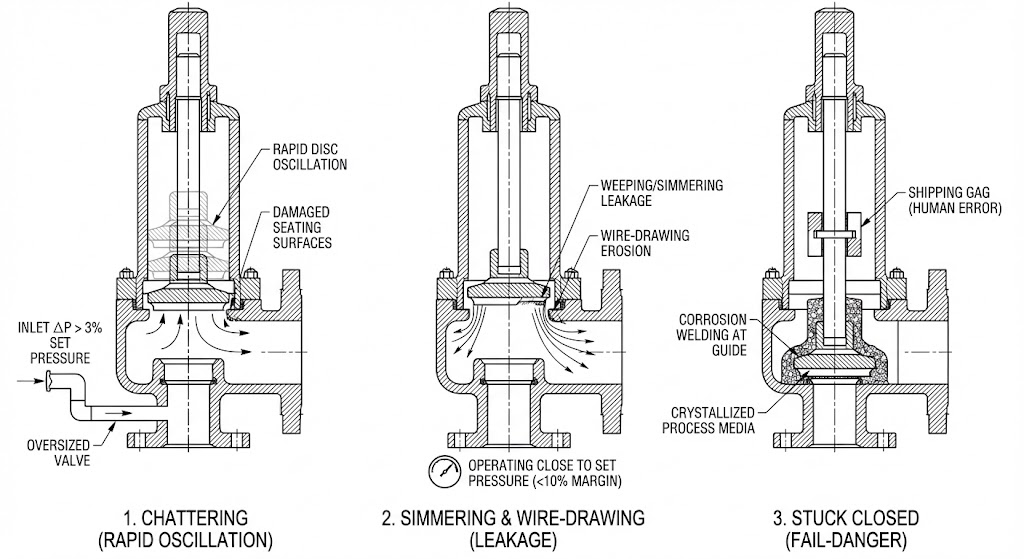
| Valve won’t open at set pressure | Wrong setting, dirt, damaged spring | Check setting, clean valve, replace spring |
| Valve leaks when closed | Damaged seat, dirt on surfaces | Clean or repair sealing surfaces |
| Valve chatters or vibrates | Wrong size, high back pressure | Check sizing, reduce back pressure |
Maintenance Schedule
- Daily: Visual inspection for leaks
- Monthly: Check pressure settings
- Annually: Professional testing and certification
- As needed: Clean and repair
Standards and Regulations
Adjustable relief valves must meet industry standards:
- ASME BPVC: Boiler and pressure vessel code
- API 520/521: Sizing and selection guidelines
- API 526: Flanged steel pressure relief valves
- ISO 4126: International safety valve standards
Always make sure your valve meets the right standards for your application.
Future Technology Trends
The relief valve industry is evolving with new technologies:
Smart Valves
- Built-in sensors monitor pressure and temperature
- Wireless communication for remote monitoring
- Predictive maintenance alerts
Digital Control
- Electronic pressure adjustment instead of manual
- Integration with plant control systems
- Automatic adjustment based on operating conditions
Advanced Materials
- Better corrosion resistance
- Longer service life
- Improved sealing performance
Cost Considerations
When budgeting for an adjustable relief valve, consider:
Initial Costs
Direct-acting: $100-$2,000
Pilot-operated: $500-$10,000+
Operating Costs
Energy losses
Maintenance
Downtime costs
Total Cost of Ownership
Sometimes spending more upfront saves money over time through:
- Better reliability
- Lower maintenance needs
- Energy savings
- Longer service life
Selecting a Manufacturer
Choose manufacturers with:
- Good reputation and track record
- Proper certifications (ASME, API, ISO)
- Local service and support
- Spare parts availability
Safety First: Important Warnings
Remember these critical safety points:
- 1Never exceed the valve’s pressure or temperature ratings
- 2Don’t modify or repair safety valves yourself – use certified technicians
- 3Test valves regularly according to code requirements
- 4Make sure discharge goes to a safe location
- 5Follow lockout/tagout procedures during maintenance
Conclusion
An adjustable relief valve is essential safety equipment that protects your systems from dangerous overpressure. Whether you choose a simple direct-acting valve or a sophisticated pilot-operated model, the key is selecting the right type for your specific needs.
Remember to:
- Size the valve properly for your flow requirements
- Install it correctly with proper piping
- Maintain it according to manufacturer recommendations
- Follow all applicable codes and standards
When in doubt, consult with valve manufacturers or pressure system engineers. The small investment in proper selection and maintenance pays off in safety, reliability, and peace of mind.
Your adjustable relief valve might seem like a simple device, but it’s standing guard 24/7 to keep your systems safe. Give it the attention it deserves, and it will protect your equipment, your people, and your business for years to come.