For complete selection guidelines and cross-reference documentation on this product line, please consult our high-pressure directional control valve specs.
Have you ever wondered how water flows in only one direction through pipes? Or how your car’s engine prevents oil from flowing backward? The answer lies in a simple but clever device called a single direction valve.
What Is a Single Direction Valve?
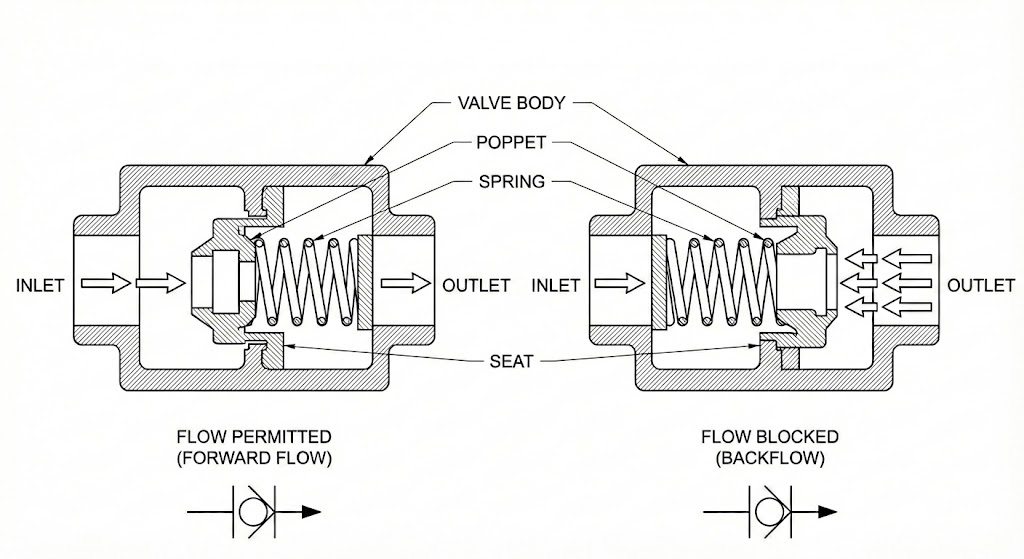
A single direction valve is a special type of valve that lets fluid flow in only one direction, also commonly known as a check valve or non-return valve. Think of it like a door that only opens one way – you can push it open from one side, but it won’t open when pushed from the other side.
These valves go by many names:
- Check valve (most common technical name)
- One-way valve (describes what it does)
- Non-return valve (emphasizes stopping backflow)
- Backflow preventer (used in water systems)
No matter what you call it, they all do the same job: keep fluids moving in the right direction.
Why Do We Need Single Direction Valves?
Imagine what would happen if water in your home’s pipes could flow backward. Dirty water from your toilet might end up in your kitchen sink! That’s exactly why we need these valves.
Safety First
They prevent contaminated water from mixing with clean water. This keeps our drinking water safe.
Equipment Protection
Pumps and other machines can break if fluid flows backward through them. Single direction valves act like bodyguards for this equipment.
System Efficiency
They help maintain proper pressure and flow in pipes, making everything work better.
Cost Savings
By preventing damage and maintaining efficiency, these valves save money on repairs and energy costs.
How Does a Single Direction Valve Work?
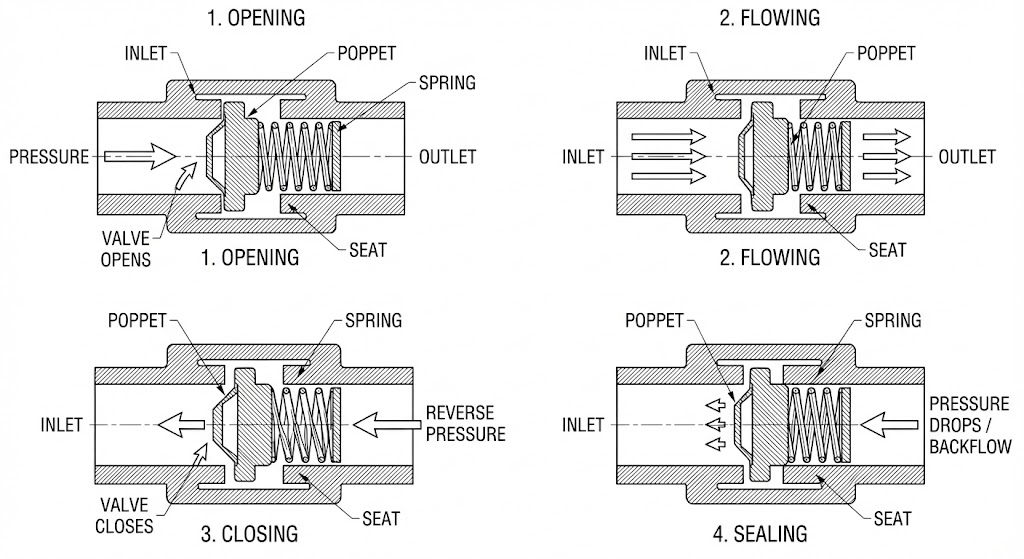
The beauty of single direction valves is their simplicity. They work without electricity or any external power source. Here’s the basic process:
It’s like having an automatic door that knows which direction is right!
Types of Single Direction Valves
Just like there are different types of doors, there are different types of single direction valves. Each works best in certain situations. To understand what check valves are and how they work, see our detailed guide.
Swing Check Valves
These have a flap (called a disc) that swings open like a door. When water flows forward, it pushes the flap open. When water tries to flow backward, the flap swings shut.
Ball Check Valves
These use a ball that rolls away from the opening when water flows forward. When flow stops or reverses, the ball rolls back to block the opening. For plastic options, explore plastic non-return valves.
Lift Check Valves
In these valves, a disc lifts straight up when water flows forward. When flow stops, gravity pulls the disc back down to seal the opening. Learn more about lift check valve specifics.
Dual Plate Check Valves
These have two half-circle plates that fold open like butterfly wings. They’re compact and close quickly to prevent water hammer (sudden pressure surges).
Diaphragm Check Valves
These use a flexible rubber sheet that bends to let water through. They’re gentle and work well with sensitive fluids.
Duckbill Check Valves
Named for their shape, these valves look like a duck’s bill. They’re made of flexible rubber and work great with dirty water.
Where Are Single Direction Valves Used?
These versatile valves show up in more places than you might think:
Home and Buildings
- Water heaters: Prevent hot water from flowing back into cold lines
- Sump pumps: Keep water from flowing back into basements
- Dishwashers: Stop dirty water from contaminating clean water supply
Municipal Systems
- Water treatment plants: Ensure clean water stays clean
- Sewage systems: Keep waste flowing in the right direction
- Fire sprinkler systems: Maintain proper pressure
Industrial Applications
- Chemical plants: Prevent dangerous mixing of chemicals
- Oil refineries: Control flow in complex piping systems
- Power plants: Protect expensive equipment
Transportation
- Cars: Keep oil and coolant flowing correctly
- Airplanes: Critical for fuel and hydraulic systems
- Ships: Essential for ballast and fuel systems
Medical Equipment
- IV drips: Prevent blood from flowing back into medicine bags
- Breathing machines: Control air flow in ventilators
- Dialysis machines: Ensure proper blood flow direction
Choosing the Right Single Direction Valve
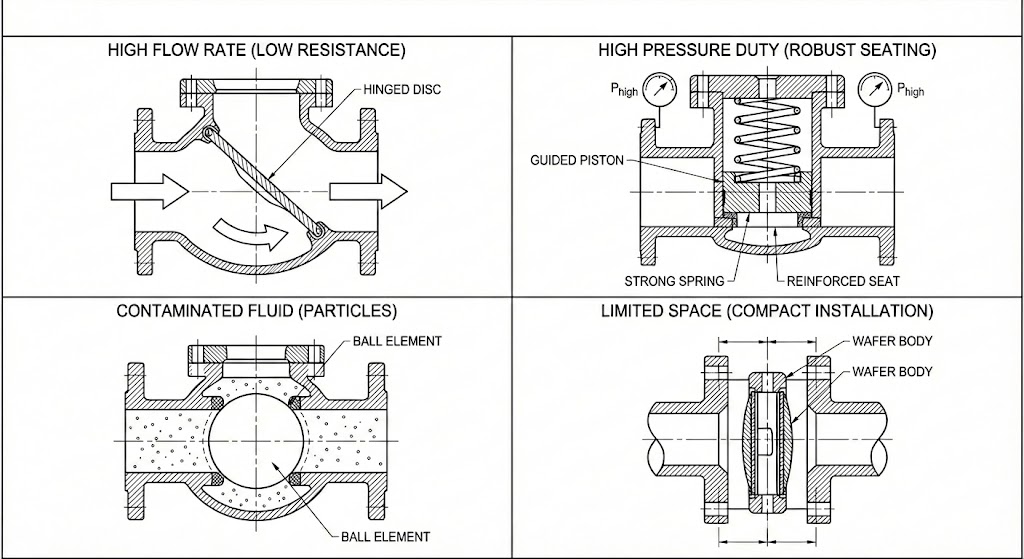
Selecting the right valve isn’t just about pipe size. Here are the key factors to consider:
Flow Rate
How much water needs to flow through? Large flows need valves with low resistance (like swing check valves).
Pressure
High-pressure systems need stronger valves that can handle the force (like lift check valves).
Fluid Type
- Clean water: Most valve types work well
- Dirty water with particles: Ball or duckbill valves are better
- Chemicals: Special materials may be needed
- Food or medicine: Sanitary diaphragm valves are preferred
Space Available
Tight spaces might need compact dual plate valves, while open areas can accommodate larger swing check valves.
Maintenance Needs
Some valves need more cleaning and replacement parts than others. Consider long-term costs, not just initial price.
Common Problems and Solutions
Like any mechanical device, single direction valves can have issues. Here are the most common problems and what to do about them:
Valve Won’t Close (Leakage)
Symptoms: Water flows backward
Causes: Debris stuck in the valve, worn out sealing parts, wrong valve size or type
Solutions: Clean the valve and remove debris, replace worn seals or the entire valve, check if the valve is properly sized for the application
Valve Won’t Open
Symptoms: No flow or very low flow
Causes: Valve stuck shut, not enough pressure to open, debris blocking the opening mechanism
Solutions: Clean or replace the valve, check if system pressure is adequate, verify correct valve orientation
Noise and Vibration (Chatter)
Symptoms: Rattling or banging sounds
Causes: Flow rate too low for valve size, unstable flow conditions, valve closing too quickly (water hammer)
Solutions: Use smaller valve or different type, install flow stabilizers, add surge tanks or different valve design
Frequent Failure
Symptoms: Valve needs frequent replacement
Causes: Wrong valve type for application, poor water quality, system pressure too high
Solutions: Consult with valve expert for proper selection, install filters upstream, add pressure relief valves
Materials Matter
Single direction valves are made from various materials, each with pros and cons:
Stainless Steel
Pros: Strong, resists rust, lasts long
Cons: More expensive
Best for: Clean water, chemicals, high pressure
Brass
Pros: Affordable, easy to work with
Cons: Can corrode in some conditions
Best for: Home plumbing, low pressure
PVC (Plastic)
Pros: Cheap, won’t rust, lightweight
Cons: Not as strong, temperature limits
Best for: Pool systems, low pressure water
Cast Iron
Pros: Very strong, handles high pressure
Cons: Can rust, heavy
Best for: Large municipal water systems
Installation Tips for Success
Proper installation is crucial for valve performance:
Orientation Matters
Most valves must be installed in the correct direction. Look for flow arrows on the valve body – these show which way fluid should flow.
Pipe Support
Valves add weight to pipes. Make sure pipes are properly supported to prevent stress on the valve.
Accessibility
Install valves where they can be easily inspected and maintained. Don’t bury them where you can’t reach them later.
Upstream Strainer
Consider installing a strainer before the valve to catch debris that could cause problems.
The Future of Single Direction Valves
Technology is making these simple devices even better:
Smart Valves
New valves can connect to the internet and report their status. This helps maintenance teams know when service is needed before problems occur.
Better Materials
Scientists are developing new materials that last longer and resist more types of chemicals.
3D Printing
Custom valves can now be printed for special applications, making unique solutions more affordable.
Energy Efficiency
New designs reduce energy loss, helping save money on pumping costs.
Market Trends and Growth
The single direction valve market is growing steadily. Here’s why:
- Infrastructure Growth: More buildings and cities need water systems
- Environmental Concerns: Better valves help prevent pollution
- Industrial Expansion: More factories need reliable flow control
- Aging Infrastructure: Old valves need replacement with better designs
The market was worth $4.43 billion in 2023 and is expected to reach $6.5 billion by 2035.
Maintenance Best Practices
Taking care of single direction valves extends their life:
Regular Inspections
Check valves every 6-12 months for:
- Signs of leakage
- Unusual noises
- Corrosion or damage
- Proper operation
Cleaning
Remove debris and buildup that could interfere with operation. This is especially important in dirty water applications.
Record Keeping
Track when valves were installed, serviced, and replaced. This helps predict when future maintenance will be needed.
Professional Service: For critical applications, have qualified technicians inspect and service valves regularly.
Cost Considerations
When budgeting for single direction valves, consider:
Initial Cost
Prices range from $20 for simple plastic valves to thousands for large industrial units.
Installation Cost
Professional installation ensures proper operation and may be required by local codes.
Operating Cost
Energy losses from pressure drop can add up over time, especially in large systems.
Maintenance Cost
Factor in cleaning, repairs, and eventual replacement when calculating total cost of ownership.
Safety and Regulations
Single direction valves play crucial roles in safety:
- Drinking Water Protection: Many jurisdictions require backflow preventers to protect public water supplies.
- Industrial Safety: In chemical plants, proper valve selection and installation can prevent dangerous situations.
- Building Codes: Local building codes often specify where and what types of valves must be used.
- Professional Standards: Industry organizations like ASME and API publish standards that ensure valves meet safety and performance requirements.
Conclusion: Why Single Direction Valves Matter
Single direction valves may seem simple, but they’re essential for modern life. They keep our water clean, protect expensive equipment, and ensure systems work efficiently and safely.
Whether you’re a homeowner dealing with a sump pump, an engineer designing a water treatment plant, or a maintenance technician keeping systems running, understanding these valves helps you make better decisions.
The key takeaways are:
- Choose the right valve type for your specific application
- Pay attention to materials and sizing
- Install correctly and maintain regularly
- Consider long-term costs, not just initial price
- Stay informed about new technologies and materials
As technology advances, single direction valves will become even more important in our increasingly connected and automated world. By understanding how they work and how to use them properly, we can build better, safer, and more efficient systems for everyone.
Remember: when in doubt, consult with professionals. Proper valve selection and installation is an investment in safety, reliability, and peace of mind.