If you’re searching for “types of PRV,” you might be confused about what PRV actually means. That’s because PRV can stand for two completely different things in the valve world: Pressure Relief Valves and Pressure Reducing Valves. Don’t worry – this guide will clear up all the confusion and help you understand both types.
For complete selection guidelines and cross-reference documentation on this product line, please consult our hydraulic pressure control valve guide.
What Does PRV Mean? Clearing Up the Confusion
The biggest challenge when talking about PRV types is that the same three letters can mean two totally different valves:
Pressure Relief Valve (PRV)
A safety device that opens to prevent dangerous overpressure
Pressure Reducing Valve (PRV)
A control device that lowers and maintains steady downstream pressure
Think of it this way: one PRV protects you FROM too much pressure (relief valve), while the other PRV gives you the RIGHT amount of pressure (reducing valve). Let’s explore both types.
Part 1: Pressure Relief Valve Types – Your Safety Guards
Pressure relief valves are like emergency exits for your pressure systems. They stay closed during normal operation but spring into action when pressure gets dangerously high.
1. Spring-Loaded Relief Valves (Direct Acting)
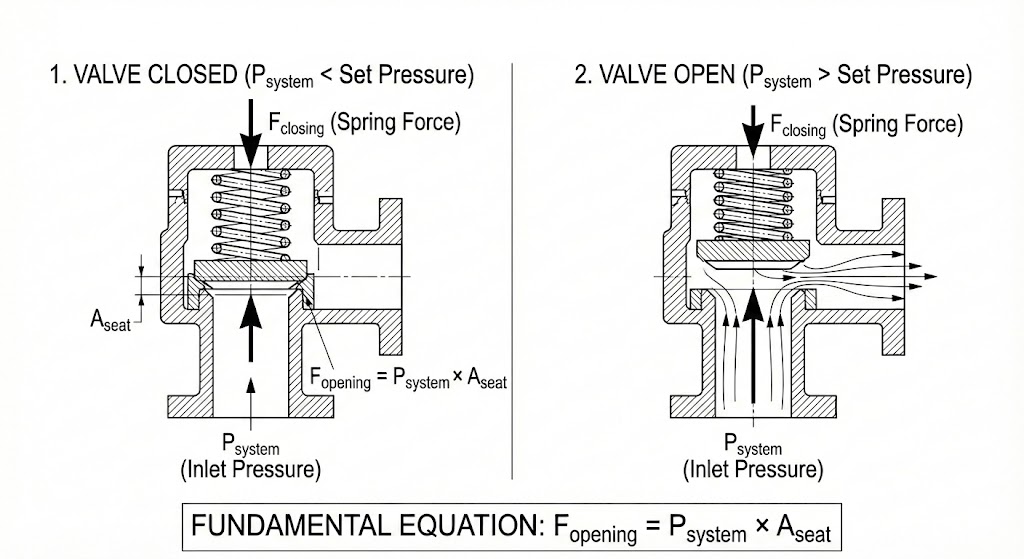
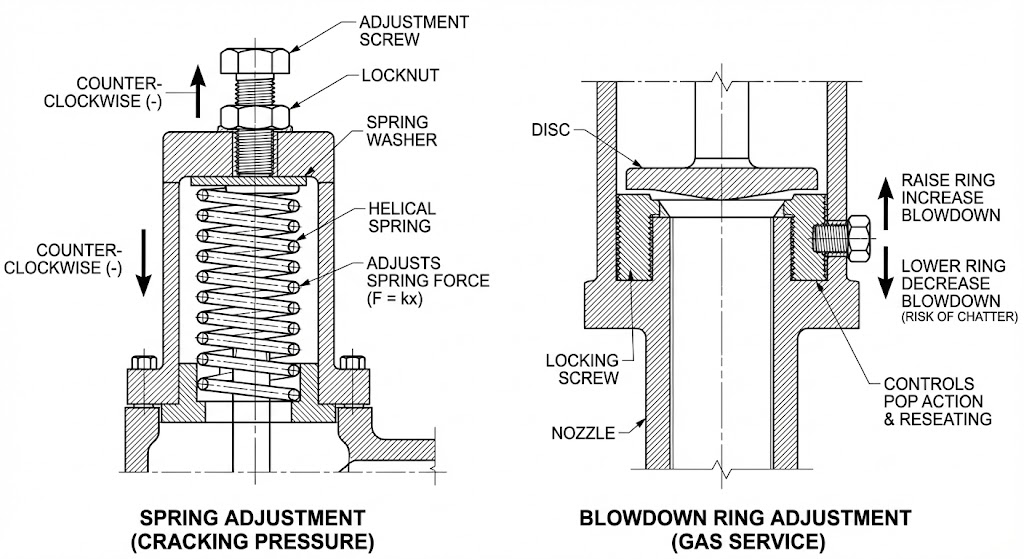
How they work: These are the most common type. A spring holds the valve closed against system pressure. When pressure gets too high, it overcomes the spring force and the valve pops open.
Key Features:
- Simple design with few moving parts
- Fast response time
- Lower cost
- Works well for clean fluids
Limitations:
- Sensitive to backpressure changes
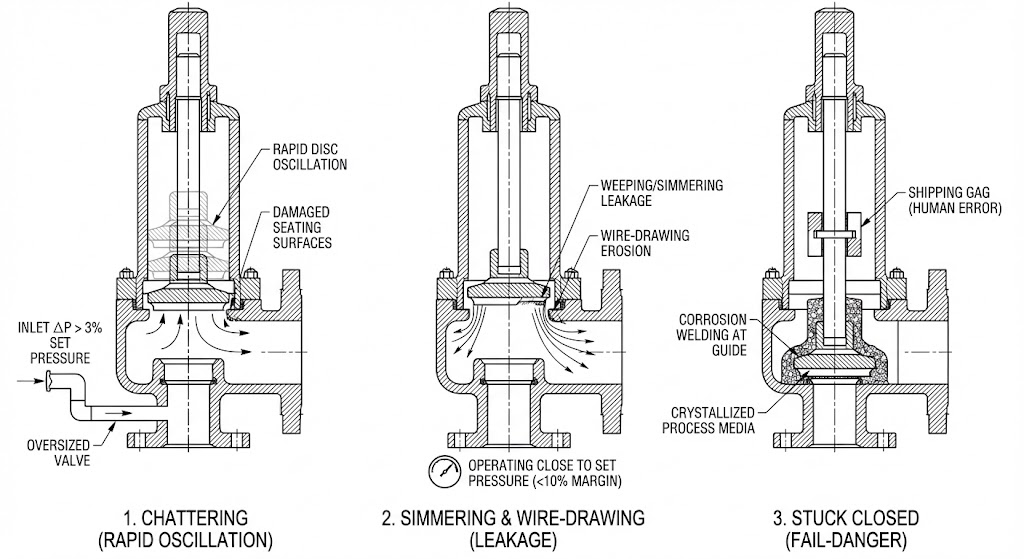
- May “chatter” (rapidly open and close) near set pressure
- Accuracy around ±10%
Best for: General industrial applications where backpressure is constant and high precision isn’t critical.
2. Pilot-Operated Relief Valves (PORV)
How they work: These use a small pilot valve to control a larger main valve. The pilot senses pressure and controls whether the main valve opens or closes. It’s like having a smart assistant that decides when to open the big door. [Compare with safety relief valve types]
Key Features:
- Excellent sealing (can operate at 98% of set pressure without leaking)
- Not affected by backpressure changes
- High accuracy (±1% to ±5%)
- Can handle large flow rates
Limitations:
- More complex and expensive
- Slower response than spring-loaded valves
- Sensitive to dirty fluids that can clog small passages
Best for: High-pressure, large-capacity applications where tight sealing and accuracy are crucial.
3. Balanced Bellows Relief Valves
How they work: These spring-loaded valves have a special bellows (accordion-like metal tube) that cancels out the effects of changing backpressure.
Key Features:
- Eliminates backpressure effects on set pressure
- Protects internal parts from corrosive fluids
- Maintains accuracy despite outlet pressure changes
Limitations:
- More expensive than standard spring-loaded valves
- Bellows can be damaged by particles or corrosion
Best for: Systems where multiple relief valves discharge to a common header, or when dealing with corrosive fluids.
4. Specialty Relief Valve Types
Thermal Relief Valves:
- Handle small volume increases from liquid thermal expansion
- Common in aircraft hydraulic systems and isolated liquid lines
Nozzle-Type Safety Valves:
- Use nozzle design instead of flat seat
- Better for fluids with particles or debris
- Higher cost but longer service life
Temperature-Activated Valves:
- Respond to temperature rise or combined temperature/pressure
- Used in water heaters and steam systems
Part 2: Pressure Reducing Valve Types – Your Pressure Controllers
Pressure reducing valves are like governors that take high, variable upstream pressure and deliver steady, lower downstream pressure.
1. Direct-Acting Reducing Valves
How they work: A spring pushes against a diaphragm or piston that senses downstream pressure. When downstream pressure drops (more flow needed), the spring opens the valve more. When pressure rises (less flow needed), the valve closes.
Key Features:
- Simple, reliable design
- Fast response to pressure changes
- Lower cost
- No minimum pressure drop required
Limitations:
- “Droop” – downstream pressure drops as flow increases
- Limited accuracy (±5% to ±10%)
- Best for smaller flow rates
Best for: Home water systems, small pneumatic tools, applications where some pressure variation is acceptable.
2. Pilot-Operated Reducing Valves
How they work: A small pilot valve senses downstream pressure and controls the main valve. The pilot valve adjusts the pressure above the main valve’s diaphragm, which then moves the main valve to maintain steady downstream pressure.
Key Features:
- Excellent accuracy (±1% to ±3%)
- Maintains steady pressure despite flow changes
- Can handle large flow rates and high pressure drops
- Very stable control
Limitations:
- More complex and expensive
- Slower response than direct-acting valves
- Requires minimum pressure drop to operate
Best for: Industrial steam systems, municipal water distribution, large pneumatic systems where precise pressure control is essential.
Quick Comparison: Relief vs. Reducing Valves
| Feature | Pressure Relief Valves | Pressure Reducing Valves |
|---|---|---|
| Purpose | Emergency safety protection | Continuous pressure control |
| Normal state | Closed | Modulating (partly open) |
| Senses pressure from | Upstream (inlet) | Downstream (outlet) |
| When they work | Only during overpressure | Continuously during operation |
| Flow direction | OUT of system | THROUGH system |
How to Choose the Right Type
For Relief Valves:
- Simple applications: Spring-loaded valves work fine
- Variable backpressure: Use balanced bellows or pilot-operated
- High accuracy needed: Choose pilot-operated
- Dirty fluids: Stick with spring-loaded
- Large capacity: Consider pilot-operated
For Reducing Valves:
- Small, steady loads: Direct-acting is sufficient
- Variable loads: Pilot-operated gives better control
- High accuracy required: Definitely pilot-operated
- Cost-sensitive: Direct-acting is more economical
See all pressure valve types for complete options
Sizing and Standards
Cv Method
For both valve types, you’ll often see “Cv” ratings. This tells you how much water (in gallons per minute) flows through the valve with a 1 psi pressure drop. Higher Cv = more flow capacity.
Key Standards
- ASME Section VIII: Requires pressure vessels to have relief protection
- API 521: Helps identify what could cause overpressure
- API 520: Provides formulas to calculate required valve size
- API 526: Standardizes relief valve sizes and specifications
Real-World Applications
Relief Valves Are Found On:
- Pressure vessels and tanks
- Boilers and steam systems
- Pump discharge lines
- Compressed air receivers
- Chemical reactors
Reducing Valves Are Found In:
- Home water systems (reducing city pressure)
- Building steam heating systems
- Pneumatic tool air supplies
- Industrial gas distribution
- HVAC systems
Maintenance and Troubleshooting
Common Problems:
Relief Valves:
- Chattering (rapid open/close) – usually oversized valve
- Leaking – damaged seat or wrong pressure setting
- Won’t open – wrong size, damaged spring, or blocked
Reducing Valves:
- Pressure drift – worn internal parts or wrong pilot setting
- Hunting (pressure oscillation) – improper sizing or installation
- Won’t reduce pressure – blocked pilot line or damaged diaphragm
Best Practices:
- Install relief valves close to protected equipment
- Keep inlet piping short and straight
- For reducing valves, take pressure sensing downstream of any turbulence
- Regular testing and maintenance are essential
The Future: Smart Pressure Control
Modern PRVs (both types) are getting smarter with:
Smart Features:
- Built-in pressure sensors and wireless monitoring
- Predictive maintenance alerts
- Data logging for compliance and optimization
- Remote adjustment capabilities
Conclusion
Understanding the different types of PRV – whether you mean pressure relief or pressure reducing valves – is crucial for safe and efficient system operation. Here’s the key takeaway:
- Relief valves = Safety devices that protect against overpressure
- Reducing valves = Control devices that maintain steady downstream pressure
Choose spring-loaded for simplicity and cost, pilot-operated for precision and capacity, and balanced designs when backpressure varies. Always follow proper sizing calculations and industry standards to ensure your pressure control system works safely and effectively.
Remember: the right valve type depends on your specific application, accuracy requirements, and budget. When in doubt, consult with a qualified engineer or valve manufacturer to ensure you get the protection and performance you need.