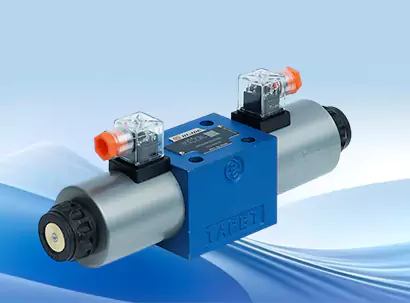
Think of a directional valve as the traffic controller of a hydraulic system. Just like a traffic light tells cars when to go, stop, or turn, a directional valve tells hydraulic fluid where to flow and when to move. In this article, we’ll explore exactly what role these important valves play and why they’re essential for making hydraulic machines work properly.
What Is a Directional Valve?
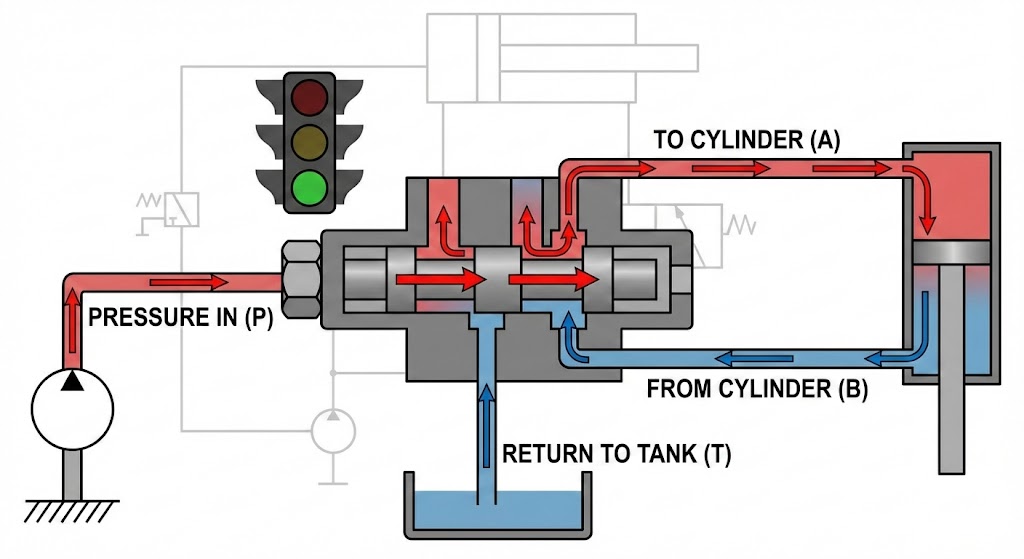
A directional valve is a mechanical device that controls the path of hydraulic fluid in a system. Imagine hydraulic fluid (usually oil) as water flowing through pipes, and the directional valve as a smart switch that can:
- Direct fluid flow from the pump to different parts of the machine
- Stop fluid flow when needed
- Control the direction fluid moves (forward or backward)
- Manage when hydraulic parts start or stop moving
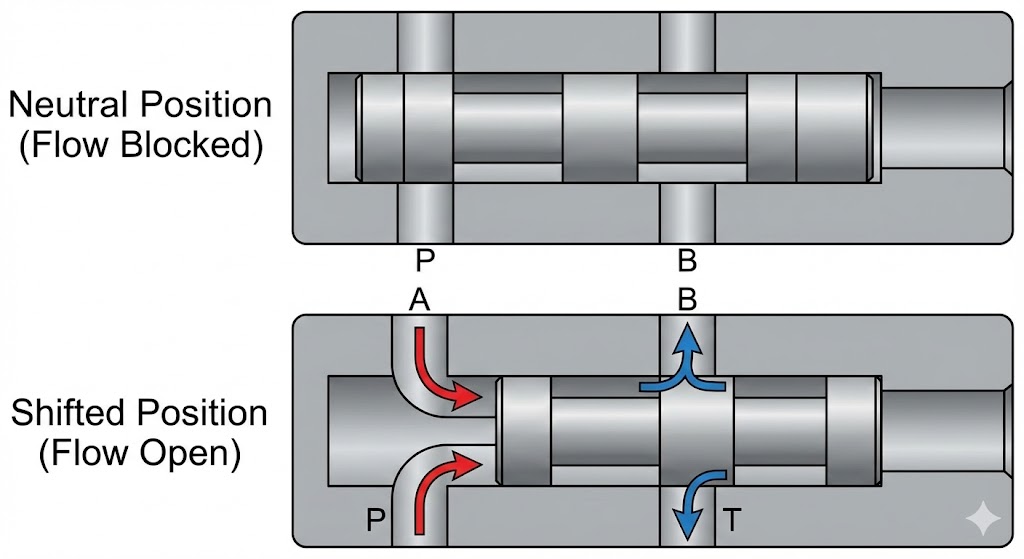
The directional valve works by moving an internal part (called a spool or poppet) that opens and closes different pathways for the fluid. This simple but clever design allows one valve to control complex movements in heavy machinery. Learn about directional valve control methods.
The Main Roles of Directional Valves in Hydraulic Systems
1. Traffic Control for Hydraulic Fluid
The primary job of a directional valve is to act like a traffic cop for hydraulic fluid. Here’s how:
- Guides fluid flow: It directs pressurized oil from the pump to the right cylinder or motor
- Creates return paths: It sends used fluid back to the tank for recycling
- Prevents wrong-way flow: It stops fluid from going where it shouldn’t
2. Movement Control
Directional valves give operators precise control over machine movements:
- Forward and reverse motion: Like putting a car in drive or reverse
- Start and stop actions: Instant control over when movements begin and end
- Speed adjustment: Some advanced valves can control how fast things move
3. Safety Management
These valves play a crucial safety role by:
- Stopping fluid flow during maintenance or emergencies
- Preventing accidental movement when the machine is parked
- Allowing controlled shutdown of hydraulic operations
4. Energy Management
Smart directional valves help save energy by:
- Reducing wasted pressure when the machine isn’t working
- Allowing pumps to idle when no movement is needed
- Recycling fluid efficiently through the system
Types of Directional Valves
Not all directional valves are the same. Different machines need different types of valves based on their jobs:
Spool Valves (Most Common)
How they work: A cylindrical piece (spool) slides back and forth inside the valve body
Best for: Complex machines that need multiple fluid paths
Examples: Excavators, bulldozers, industrial machines
Advantages:
- Can handle multiple fluid paths at once
- Very versatile for complex operations
- Good for high-flow applications
Disadvantages:
- More sensitive to dirty fluid
- Can have small internal leaks
- More expensive to maintain
Poppet Valves (Simple but Effective)
How they work: A cone-shaped piece lifts up and down to open/close flow
Best for: High-pressure applications where tight sealing is important
Examples: Safety valves, check valves
Advantages:
- Very tight sealing (almost no leaks)
- Works well with high pressure
- Less sensitive to dirty fluid
Disadvantages:
- Limited to simpler fluid paths
- Needs more force to operate
Check Valves (One-Way Only)
Special purpose: Only allows fluid to flow in one direction
Best for: Preventing backflow and maintaining pressure
Examples: Keeping cylinders extended when power is off
How Directional Valves Are Controlled
Directional valves can be operated in several ways:
Manual Control
- Method: Hand levers or knobs
- Best for: Simple machines, emergency controls
- Example: Small farm equipment, manual presses
Electric Control (Solenoid)
- Method: Electric coils that move the valve
- Best for: Automated systems, remote operation
- Example: Factory machines, robotic systems
Hydraulic Pilot Control
- Method: Small amounts of hydraulic pressure control the main valve
- Best for: Large machines with high fluid flow
- Example: Big excavators, industrial presses
Air (Pneumatic) Control
- Method: Compressed air operates the valve
- Best for: Fast-acting systems
- Example: Manufacturing equipment
Impact on System Performance
The directional valve significantly affects how well a hydraulic system works:
Speed Control
- Direct impact: Valve opening size controls fluid flow rate
- Result: Faster flow = faster movement, slower flow = slower movement
- Benefit: Operators can adjust speed for different tasks
Pressure Management
- Role: Valves work with pressure relief valves to control system pressure
- Importance: Prevents damage from too much pressure
- Safety: Protects expensive components
Energy Efficiency
Different valve designs affect energy use:
- Open center valves: Let fluid return to tank when not working (good for cooling)
- Closed center valves: Hold pressure when not working (saves pump energy)
- Load sensing valves: Adjust automatically to save energy
Response Time
- Hydraulic advantage: Liquid can’t be compressed, so response is nearly instant
- Valve quality: Better valves respond faster and more precisely
- Application: Critical for precision work like surgery robots or aircraft controls
Real-World Applications
Directional valves are everywhere in our daily lives:
Construction Equipment
- Excavators: Control boom, arm, and bucket movements
- Bulldozers: Raise and lower blades
- Cranes: Control lifting and rotating
Manufacturing
- Assembly lines: Position parts precisely
- Presses: Control pressing force and timing
- Robots: Enable precise movements
Transportation
- Dump trucks: Raise and lower truck beds
- Garbage trucks: Control compacting and lifting mechanisms
- Aircraft: Control landing gear, flaps, and flight controls
Agriculture
- Tractors: Control implement positioning
- Harvesters: Manage cutting and collection systems
- Irrigation: Control water flow and sprinkler positioning
Common Problems and Solutions
Like any mechanical device, directional valves can have problems:
Common Issues:
Sticking or Jamming
- Cause: Dirty fluid or worn parts
- Solution: Regular fluid changes and cleaning
- Prevention: Use proper filtration
Internal Leakage
- Cause: Worn seals or scratched surfaces
- Symptoms: Slow or weak movement
- Solution: Rebuild or replace valve
External Leaks
- Cause: Damaged seals or loose connections
- Symptoms: Visible fluid leaks
- Solution: Replace seals and tighten connections
Noisy Operation
- Cause: Air in system or worn parts
- Solution: Bleed air and check for wear
Maintenance Tips:
- Keep fluid clean with regular filter changes
- Check for leaks during daily inspections
- Monitor fluid temperature to prevent overheating
- Follow manufacturer’s maintenance schedule
- Train operators on proper use
The Future of Directional Valves
Technology is making directional valves smarter and more efficient:
Smart Valves
- Built-in sensors: Monitor pressure, temperature, and position
- Self-diagnosis: Detect problems before they cause failures
- Remote monitoring: Check valve condition from anywhere
Better Materials
- Advanced coatings: Reduce wear and extend life
- Stronger alloys: Handle higher pressures and temperatures
- 3D printing: Create more precise and compact designs
Energy Efficiency
- Variable displacement: Adjust flow based on actual needs
- Energy recovery: Capture and reuse energy from movements
- Smarter controls: Optimize performance automatically
Miniaturization
- Smaller valves: Fit in tight spaces
- Lighter weight: Important for mobile equipment
- Integration: Combine multiple functions in one unit
Conclusion
Directional valves are truly the “brain” of hydraulic systems. They make the crucial decisions about where hydraulic fluid goes, when it moves, and how fast it travels. Without these important components, modern machinery like excavators, factory robots, and aircraft couldn’t perform their precise movements.
Understanding the role of directional valves helps us appreciate the engineering behind the powerful machines we see every day. From the dump truck picking up your garbage to the robot building your car, directional valves are working behind the scenes to make these complex movements possible.
As technology advances, directional valves continue to evolve, becoming smarter, more efficient, and more reliable. This evolution promises even better performance from the hydraulic systems that power our modern world.
Whether you’re a student learning about hydraulic systems, a technician maintaining equipment, or simply curious about how things work, understanding directional valves gives you insight into one of the most important technologies in modern machinery.
The next time you see a hydraulic machine at work, remember that its precise movements are possible thanks to the humble but mighty directional valve – the traffic controller that keeps hydraulic fluid flowing exactly where it needs to go, when it needs to go there.
Key Takeaways
- Directional valves control fluid flow paths in hydraulic systems
- They enable precise control of movement, speed, and direction
- Different types serve different purposes (spool, poppet, check valves)
- Various control methods (manual, electric, hydraulic, pneumatic)
- Critical for safety, efficiency, and performance
- Found in construction, manufacturing, transportation, and agriculture
- Regular maintenance prevents problems and extends life
- Future developments focus on smart technology and efficiency