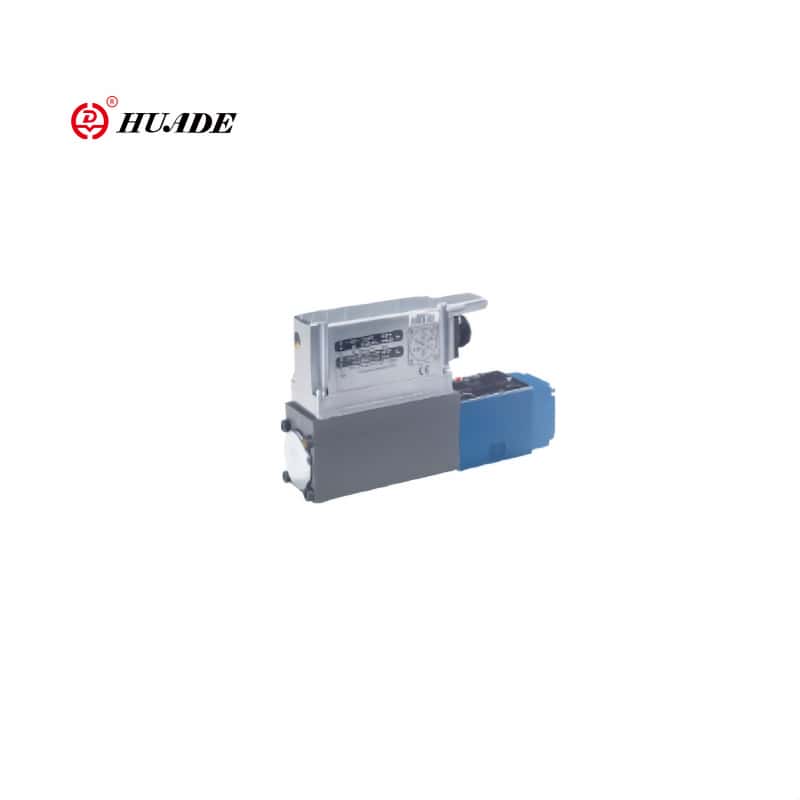
For complete selection guidelines and cross-reference documentation on this product line, please consult our proportional directional & flow control valves.
Imagine having a water faucet that could adjust its flow with perfect precision – not just on or off, but any amount between. That’s exactly what a proportional flow control valve does for industrial systems. These smart valves give engineers precise control over liquids and gases, making everything from medical devices to heavy machinery work better.
What Is a Proportional Flow Control Valve?
A proportional flow control valve (part of proportional valve) is like a smart faucet for industrial systems. Instead of just turning on or off, it can open anywhere from 0% to 100%, giving you exact control over how much fluid flows through.
How It Works (The Simple Version)
Think of it like this:
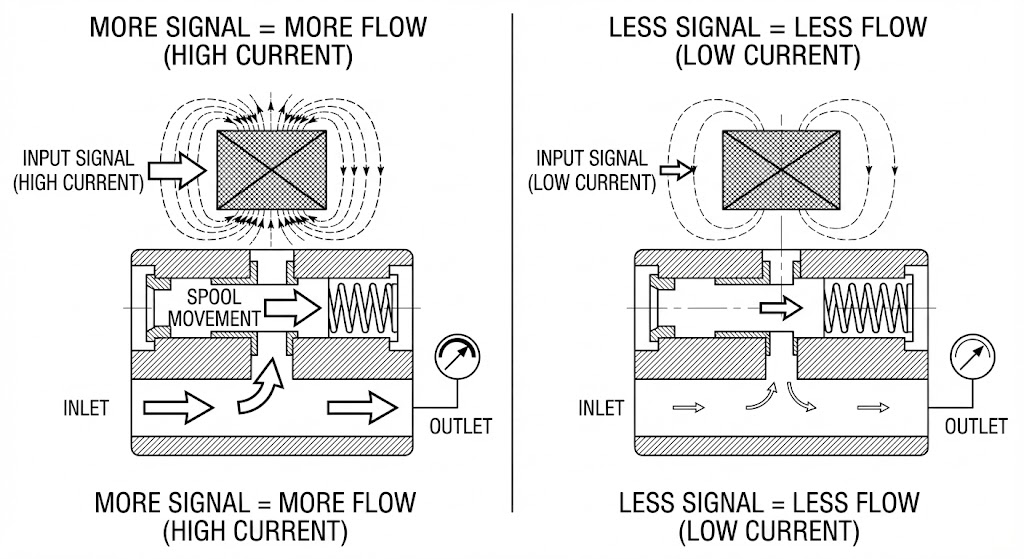
- You send an electrical signal to the valve (like pressing harder or softer on a gas pedal)
- The valve opens more or less based on that signal
- More signal = more flow, less signal = less flow
- It’s that simple!
The magic happens through electromagnetic coils that move internal parts called spools or plungers. When electricity flows through the coil, it creates a magnetic field that pushes or pulls these parts, changing how much the valve opens.
[Learn how proportional valves work in detail]
Why These Valves Matter
The Old Way vs. The New Way
Old-style on/off valves:
- Only two positions: fully open or fully closed
- Like a light switch – either on or off
- Causes sudden pressure changes and energy waste
Proportional valves:
- Smooth, continuous control
- Like a dimmer switch for fluid flow
- Saves energy and reduces wear on equipment
Real Benefits You Can See
Control flow within 0.25% of your target
Use only the power you need
No sudden jolts or pressure spikes
Less stress on pipes and pumps
Can connect to computer systems for automated control
Types of Proportional Flow Control Valves
1. Direct-Acting Solenoid Valves
These are the simplest type. An electromagnetic coil directly moves the valve parts. They’re fast (respond in 15-30 milliseconds) but work best with smaller pipes and lower pressures.
Good for:
- Laboratory equipment
- Medical devices
- Small hydraulic systems
2. Pilot-Operated Solenoid Valves
These use a small “pilot” valve to control a larger main valve. It’s like using a small key to start a big truck engine. They can handle much higher pressures and bigger flows but take slightly longer to respond.
Good for:
- Construction equipment
- Aircraft systems
- Large industrial machines
3. Motor-Driven Valves
Instead of electromagnetic coils, these use small electric motors to position the valve. They’re extremely accurate but move more slowly than solenoid types.
Good for:
- Chemical dosing systems
- Paint mixing equipment
- Precision manufacturing
4. Piezoelectric Valves
These use special crystals that change shape when electricity is applied. They’re incredibly fast and precise but work only with very small flows.
Good for:
- Semiconductor manufacturing
- Analytical instruments
- Microfluidic devices
Choosing the Right Valve
1. What Are You Controlling?
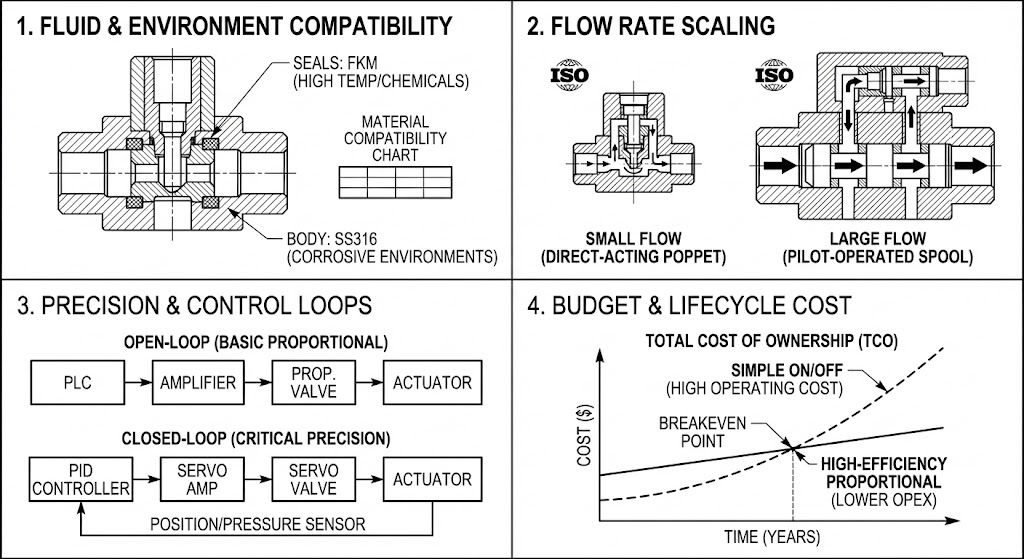
- Liquid or gas? Different fluids need different valve designs
- Corrosive chemicals? You’ll need special materials like stainless steel
- High temperature? Make sure the valve can handle the heat
2. How Much Flow Do You Need?
- Small flows (like a drinking fountain): Direct-acting valves work great
- Large flows (like filling a swimming pool): You’ll need pilot-operated valves
3. How Precise Must It Be?
- General industrial use: Basic proportional control is fine
- Critical applications: You’ll want closed-loop control with sensors
4. What’s Your Budget?
- Initial cost: Proportional valves cost more upfront than simple on/off valves
- Operating costs: They save money through better efficiency
- Maintenance: Regular calibration and clean fluid are essential
Where You’ll Find These Valves
Manufacturing and Industry
- Auto plants: Precise paint spraying and part assembly
- Chemical plants: Accurate mixing of ingredients
- Food processing: Consistent flavoring and packaging
Medical Equipment
- Ventilators: Precise oxygen delivery to patients
- Anesthesia machines: Safe, controlled drug delivery
- Dialysis equipment: Accurate fluid removal
Transportation
- Aircraft: Hydraulic control for landing gear and flight controls
- Ships: Fuel injection and steering systems
- Trains: Brake and suspension systems
High-Tech Manufacturing
- Computer chip making: Ultra-precise gas delivery
- Solar panel production: Controlled chemical processes
- Pharmaceutical manufacturing: Exact drug dosing
Installation and Maintenance: Keeping Things Running
Setting It Up Right
Clean fluid is crucial: These valves are picky about cleanliness. Think of them like a luxury car engine – they need clean “fuel” to work properly.
Electrical connections matter: Use shielded cables to prevent electrical interference, just like protecting your phone from static.
Pressure matters: Install pressure regulators if your system pressure varies a lot.
Keeping Them Happy
Daily checks (really monthly):
- Look for leaks around connections
- Check for unusual noises or vibrations
- Verify that control signals are working
Regular maintenance:
- Change filters every 3 months
- Calibrate sensors once a year
- Keep spare parts on hand
Warning signs to watch for:
- Jerky or unstable flow
- Valve not responding to signals
- Unusual pressure readings
Common Problems and Solutions
Likely causes: Dirty fluid, worn valve parts, electrical interference
Solutions: Change filters, clean the valve, check electrical connections
Likely causes: Electrical problems, mechanical binding, contamination
Solutions: Test electrical signals, check for debris, verify power supply
Likely causes: Need calibration, pressure variations, worn components
Solutions: Recalibrate the system, install pressure regulators, replace worn parts
The Future of Proportional Valves
Smart Technology Integration
Modern proportional valves are getting smarter. They can:
- Monitor their own performance
- Send data to central control systems
- Predict when they need maintenance
- Adjust automatically to changing conditions
Smaller and More Efficient
New designs are becoming:
- More compact for space-limited applications
- More energy-efficient to reduce operating costs
- More environmentally friendly with better materials
Market Growth
The global market for these valves is growing fast – from $2.5 billion in 2025 to an expected $4.2 billion by 2033. This growth comes from increased automation and the push for energy efficiency across industries.
Why Invest in Proportional Valves?
Companies typically see 10-15% reduction in energy costs
More consistent processes mean fewer defective products
Smoother operation means less wear and tear on equipment
Better control reduces the risk of pressure surges and equipment failure
Return on Investment
Most companies see payback in 1-3 years through:
- Lower energy bills
- Reduced maintenance costs
- Less product waste
- Improved process efficiency
Proportional flow control valves represent a major step forward in industrial automation. While they cost more initially than simple on/off valves, their benefits – precision, efficiency, and smart capabilities – make them essential for modern manufacturing and process control.
Whether you’re designing medical equipment that must be perfectly safe, manufacturing products that require exact specifications, or operating heavy machinery that needs to be efficient, proportional valves provide the control you need.
As industries continue to automate and demand higher efficiency, these intelligent valves will become even more important. They’re not just components – they’re the key to building smarter, more efficient, and more profitable operations.
The bottom line: If your application needs precise fluid control, proportional flow control valves aren’t just a good choice – they’re often the only choice that makes sense.
Ready to upgrade your fluid control systems? Consider proportional valves for your next project. The initial investment pays for itself through better performance, lower operating costs, and improved product quality.