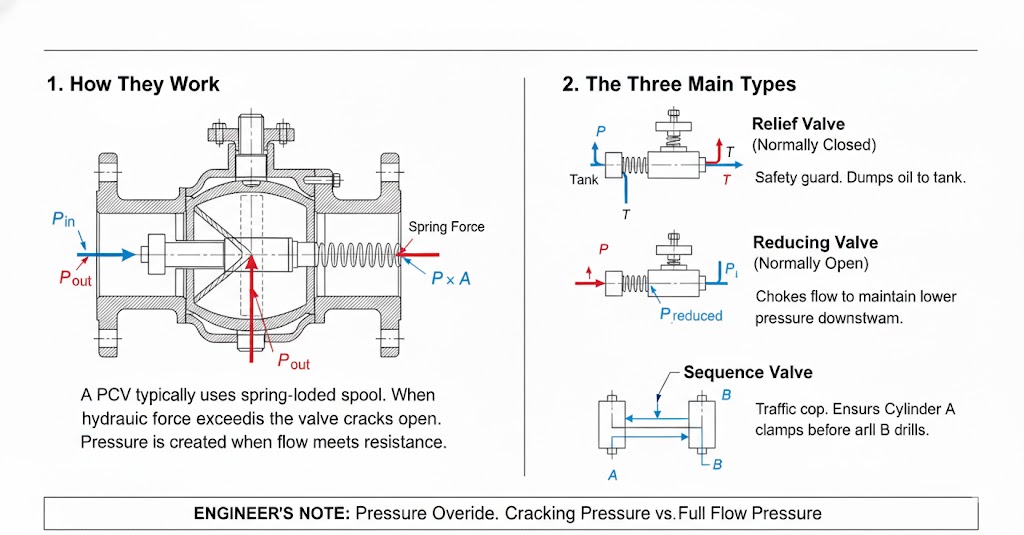
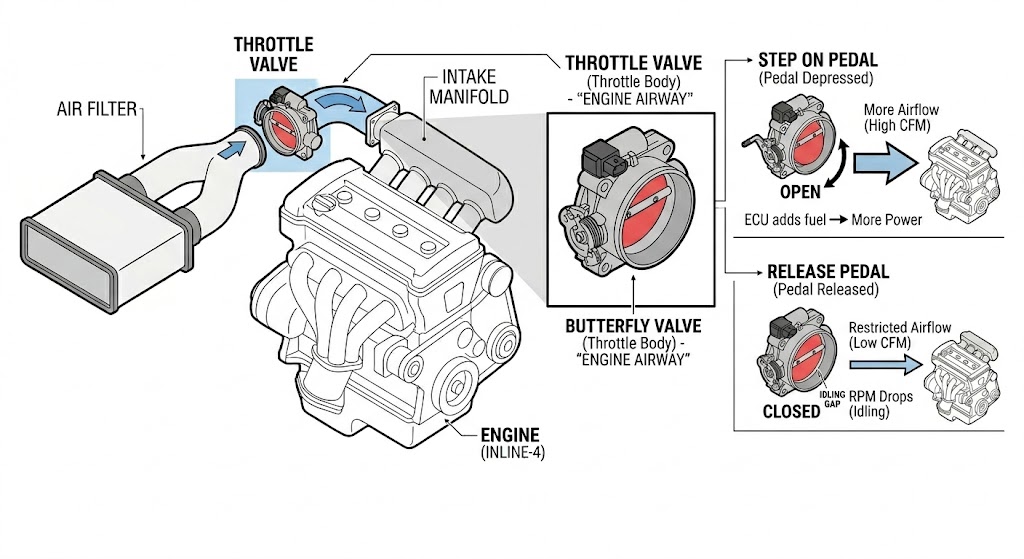
A flow control valve is a precision fluid power component that regulates volumetric flow rate by adjusting internal orifice cross-sectional area within hydraulic and pneumatic systems. In industrial machinery, improper valve adjustment is frequently the primary root cause of erratic actuator speeds and pressure instability.
In fluid power engineering, flow control valves govern the operational velocity of hydraulic cylinders and motors by metering fluid volume. Proper calibration of these valves maintains smooth mechanical motion, prevents thermal overloads, and protects critical hydraulic components from pressure shock.
Whether calibrating high-pressure hydraulic circuits, process fluid lines, or industrial pneumatic systems, this technical guide details the precise procedures to adjust flow control valves safely and accurately.
What Is a Flow Control Valve?
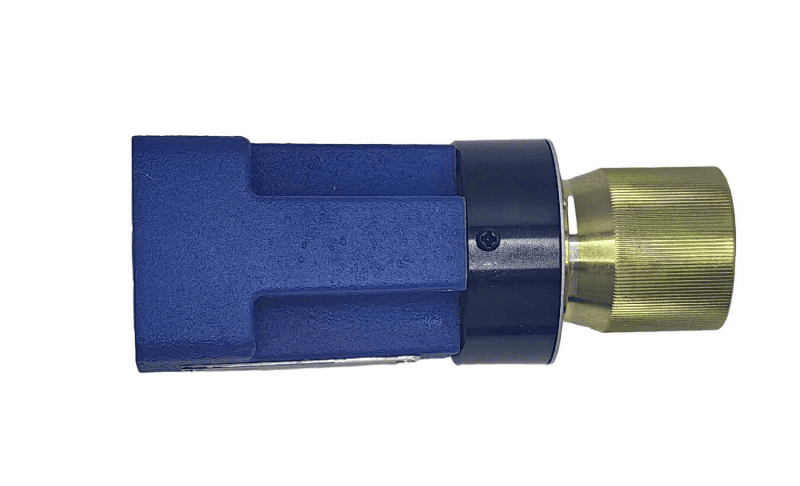
A flow control valve is an industrial fluid power component that regulates volumetric flow rate through a designated hydraulic line or pneumatic passage by varying the cross-sectional area of a throttling orifice under specified system pressures.
According to the International Society of Automation (ISA), flow control valves are fundamental components in industrial process control, serving as final control elements that regulate fluid flow rates to maintain system performance.[1]
Why Flow Control Valves Matter
In industrial fluid power systems, flow control valves perform essential functions:
- Regulate the extension and retraction velocity of hydraulic cylinders and motors.
- Mitigate pressure peaks across secondary hydraulic lines.
- Optimize power utilization by matching pump displacement to load requirements.
- Eliminate mechanical jerk during machinery cycling.
- Maintain stable actuator speeds under fluctuating operating conditions.
Improper flow control valve adjustment produces distinct operational symptoms:
- Actuator speeds exceeding design limits or stalling completely.
- Pressure oscillations and rough, inconsistent cylinder motion.
- Excessive fluid throttling leading to hydraulic oil overheating.
- Accelerated wear on internal pump components and cylinder seals.
Types of Flow Control Valves
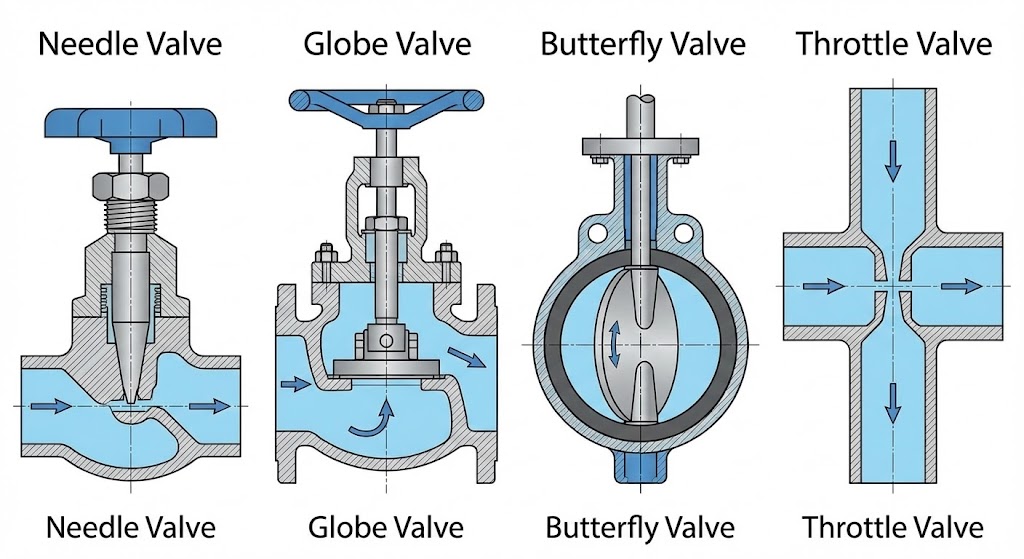
Industrial fluid systems utilize several primary valve configurations to govern fluid flow:
1. Needle Valves
Needle valves utilize a tapered needle-point stem to restrict flow through a finely machined orifice. These valves provide precise micro-metering capabilities for pilot control lines and chemical dosing systems.
Primary Application: Fine flow calibration in low-flow hydraulic lines, pilot control circuits, and chemical dosing systems.
2. Globe Valves
Globe valves utilize a linear-motion disk moving perpendicular to the valve seat. The spherical body design provides progressive throttling characteristics and reliable shut-off performance.
Primary Application: Cooling water circuits, steam utility lines, and industrial fluid applications requiring progressive flow regulation.
3. Butterfly Valves
Butterfly valves utilize a rotating metallic disc mounted on a central shaft. The quarter-turn mechanism provides rapid cycling and low pressure drop across fully open fluid lines.
Primary Application: High-volume piping circuits, raw water distribution, and installations with compact footprint requirements.
4. Throttle Valves and Throttle Check Valves
Throttle valves restrict fluid flow through an adjustable metering orifice. In hydraulic circuits, sandwich-plate throttle check valves—such as the Huade Z2FS series throttle check valve (interchangeable with Rexroth Z2FS standards)—incorporate a reverse bypass check valve for free return flow in meter-in or meter-out configurations.
Primary Application: Meter-in and meter-out speed regulation in hydraulic cylinder subplates and manifold blocks.
Pressure-Compensated vs. Non-Compensated Valves
Flow control valves are categorized based on their responsiveness to circuit pressure variations:
Non-Compensated Flow Control Valves
- Operating Principle: Volumetric flow rate varies proportionally with changes in upstream or downstream pressure differential.
- Advantages: Simple mechanical construction, compact installation envelope, and lower procurement cost.
- Limitations: Actuator speed fluctuates whenever the working load changes.
- Recommended Application: Hydraulic systems operating under stable, constant load conditions.
Pressure-Compensated Flow Control Valves
- Operating Principle: An internal hydrostat spool continuously balances pressure drop across the throttle orifice, ensuring constant flow rate regardless of load pressure variations.
- Advantages: Delivers precise, repeatable actuator speed across dynamic working loads.
- Limitations: Higher mechanical complexity and greater initial component investment.
- Recommended Application: Machine tool feeds, mobile construction machinery, and variable-load industrial presses.
Research published in the journal Machines demonstrates that pressure-compensated flow control valves utilize internal compensator mechanisms to automatically adjust for pressure variations, thereby maintaining consistent flow rates under dynamic loading conditions.[2]
Industry Standards and Compliance
Flow control valve calibration and testing must adhere to recognized international engineering standards. Primary standards governing control valve design and performance include:[3][4]
- ANSI/ISA Standards: The International Society of Automation publishes the ISA-75 series, providing engineering specifications for control valve design, sizing, and flow capacity:
- ANSI/ISA-75.01.01 (Flow capacity sizing equations for industrial control valves)
- ANSI/ISA-75.05.01 (Control valve terminology and classification)
- ANSI/ISA-75.11.01 (Inherent flow characteristics and rangeability verification)
- ISO Standards: The International Organization for Standardization specifies globally harmonized hydraulic and valve parameters:
- ISO 5208 (Industrial valves pressure testing protocols)
- ISO 6263 (Hydraulic fluid power – Compensated flow-control valves mounting surfaces)
- ISO 6403 (Hydrostatic testing methods for valves controlling flow and pressure)
- API Standards: The American Petroleum Institute governs process valve integrity, including API 598 valve inspection and leak-testing specifications.
Compliance with these standards ensures dimensional interchangeability, structural safety, and operational reliability. For complete specifications on ISO 6263-compliant fluid power components, explore our dedicated Huade hydraulic flow control valve series.
Tools You’ll Need
Prior to initiating flow control valve calibration, prepare the following diagnostic and mechanical tools:
⚠️ Safety First: Important Precautions
Calibrating pressurized industrial hydraulic circuits requires strict adherence to safety protocols:
Pre-Adjustment Protocols:
- De-energize the prime mover and verify zero hydraulic pressure via calibrated gauges.
- Discharge hydraulic accumulators completely before loosening adjustment components.
- Wear safety glasses with side shields and fluid-resistant nitrile gloves.
- Inspect fluid lines for surface temperatures exceeding safe handling thresholds.
- Review the specific equipment hydraulic schematic for circuit relief pressure limits.
Lockout/Tagout (LOTO) Procedures:
- Apply lockout/tagout devices to primary pump electrical isolators.
- Verify mechanical isolation by manually testing control levers.
- Confirm maintenance exclusion zones around moving machinery linkages.
Step-by-Step Guide to Adjusting Flow Control Valves
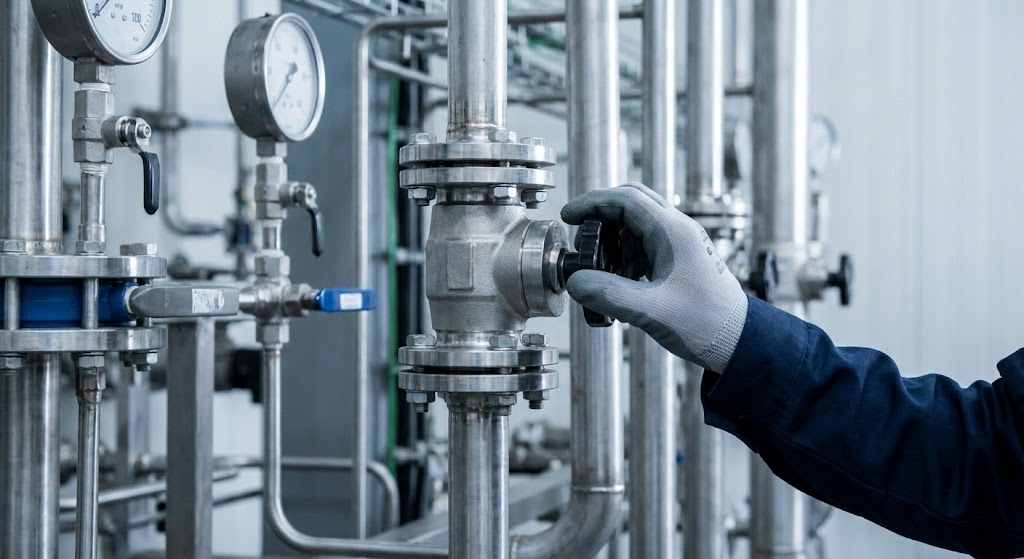
Step 1: Prepare the Hydraulic Circuit
- Isolate and depressurize the circuit following site LOTO procedures.
- Determine target actuator velocity and corresponding volumetric flow rate ($Q$) from technical documentation.
- Record current spindle position, counting turns or micrometer markings from full closure.
- Ensure inline flow meters and pressure gauges are installed at diagnostic test points.
Step 2: Execute Incremental Flow Adjustment
Flow adjustments must be conducted incrementally to prevent hydraulic shock and thermal spikes.
- Rotate the adjustment spindle or rotary knob gradually:
- Clockwise Rotation: Decreases orifice area, reducing fluid flow rate.
- Counterclockwise Rotation: Increases orifice area, expanding fluid flow rate.
- Limit manual spindle adjustments to 1/8 to 1/4 turns per iteration.
- Verify mechanical resistance to confirm the internal needle or spool travels smoothly.
Engineering Note: While clockwise rotation standardly restricts flow, technicians must verify rotation direction on the manufacturer nameplate, as specialized cartridge valves may utilize inverted spindle mechanisms.
Step 3: Monitor Flow Stabilization and Measure Output
- Restart the hydraulic power unit and observe dynamic flow meter readings under working temperature.
- Verify actuator speed matches operational cycle requirements.
- Execute minor incremental rotations to achieve exact flow targets.
- Confirm system pressure remains below maximum circuit relief valve settings.
- Allow fluid circulation to stabilize for 60 seconds between adjustment intervals.[5]
Recent research on digital hydraulic flow control demonstrates that proper adjustment timing is critical – systems require stabilization periods between adjustments to achieve accurate flow measurements.[5]
Step 4: Lock Setting and Record Technical Parameters
Following flow verification, the calibration position must be permanently secured against operational vibration.
- Torque the external locknut or engage mechanical locking pin to secure spindle position.
- Test machine motion under full operational load to confirm zero flow drift.
- Document final calibration parameters in facility maintenance management log.
Required Documentation Data:
- Spindle position (number of turns from fully seated closed position).
- Measured steady-state volumetric flow rate (L/min or GPM).
- Circuit working pressure and hydraulic oil operating temperature.
- Calibration completion date and technician identification.
- Observed valve response characteristics.
Adjusting Specific Valve Types
Needle Valve Adjustment
Needle valves exhibit high flow sensitivity due to their steep orifice flow gradient:
- Rotate the stem clockwise until needle lightly contacts internal seat (avoid excessive seating torque to prevent tip deformation).
- Rotate the stem counterclockwise to establish initial orifice opening.
- Adjust in precise increments of 1/8 turn while observing downstream pressure.
- Monitor flow rate closely, as minimal rotational increments produce significant velocity shifts.
Pro tip: When adjusting needle valves in fuel or pilot circuits, initiate calibration from a restricted setting and open progressively. This methodology prevents pressure surges and downstream equipment overloading.
Important note: Following calibration, recheck flow rates after machinery reaches steady-state thermal equilibrium. Viscosity shifts in hydraulic oil during warm-up frequently necessitate minor secondary trimming.
Globe Valve Throttling
Globe valves provide progressive, linear throttling profiles across larger flow cross-sections:
- Rotate handwheel clockwise to verify fully closed position.
- Open the valve spindle one complete revolution to establish base flow.
- Progressively rotate handwheel until target pipeline flow velocity is measured.
The axial disc travel in globe valves accommodates broader rotational adjustments compared to sensitive needle designs.
Pressure-Compensated Valve Adjustment
Pressure-compensated valves simplify commissioning by isolating flow from external load fluctuations:
- Loosen knurled locking ring or remove tamper-proof cap.
- Rotate calibrated adjustment knob to calculated scale setting (verify nameplate directional indicator: standardly clockwise reduces flow).
- Allow internal hydrostat compensator spool to balance differential pressure across throttling gap.[6]
- Secure locking ring to fix flow setting.
As noted in hydraulic system research, pressure-compensated valves employ compensator spools that maintain constant flow by automatically adjusting for pressure changes, with damping mechanisms to prevent hunting between pump and valve.[6]
Non-Compensated Valve Adjustment
Non-compensated valves demand continuous monitoring of both flow and system pressure:
- Measure pipeline flow rate concurrently with line pressure during adjustment.
- Reference manufacturer flow vs. pressure differential ($\Delta P$) curve to select dial positions.
- Account for expected system pressure swings during equipment work cycles.
- Perform periodic recalibration if ambient temperature or system loads fluctuate significantly.
Common Problems and Solutions
Problem: Valve Spindle Resists Rotation
Possible causes: Fluid contamination, internal galling, or dried packing material.
Solution: Depressurize circuit, inspect spindle threads, clean foreign debris, and lubricate according to manufacturer specifications.
Problem: Flow Rate Drifts During Operation
Possible causes: Loose spindle locknut, internal orifice wear, or hydraulic fluid viscosity breakdown.
Solution: Verify locknut torque, inspect internal metering edges for erosion, and verify hydraulic oil operating temperature and grade.
Problem: Excessive Valve Noise and Vibration
Possible causes: Fluid cavitation, high local velocities across orifice, or undersized valve body.
Solution: Verify differential pressure ($\Delta P$) does not exceed cavitation index limits; evaluate line sizing or upgrade to multi-stage pressure-reducing trim.[7][8]
Problem: External Fluid Leakage Along Spindle
Possible causes: Degraded elastomeric O-rings, deteriorated stem packing.
Solution: Depressurize valve and replace dynamic stem seals with compatible NBR or FKM sealing elements.
Problem: Delayed Response to Spindle Adjustments
Possible causes: Particulate blockage in compensation passages, worn hydrostat spool.
Solution: Flush valve body, replace system return-line filter elements, and inspect internal damping orifices for contamination.
Understanding Cavitation in Control Valves
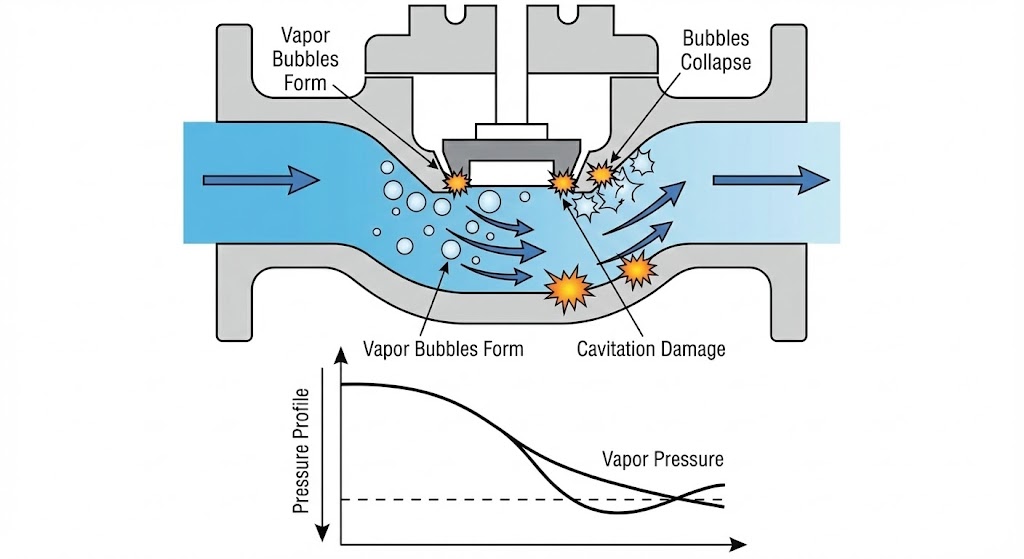
Cavitation is an erosive fluid mechanics phenomenon affecting throttling valves. It occurs when localized fluid velocity increases across the restrictive throttling orifice, causing static pressure at the vena contracta to drop below the fluid's vapor pressure ($P_v$). Vapor cavities form and subsequently collapse violently as fluid enters higher-pressure downstream regions. The implosion generates localized micro-jets with shock pressures exceeding 1,000 MPa, causing severe mechanical erosion to valve internals.[7]
According to research by Emerson, cavitation is characterized by four primary negative effects: high noise levels (often exceeding 110 dB), excessive vibration, material damage through pitting, and deterioration of flow control effectiveness.[8] The damage typically appears as a rough, cinder-like surface on valve components.
Prevention Strategies
Mitigating cavitation damage is essential for valve service life in hydraulic and process piping:[9][10]
- Appropriate Sizing and $F_L$ Factor Analysis: Select valves with an appropriate Liquid Pressure Recovery Factor ($F_L$) to ensure operational pressure drop remains below the incipient cavitation index.
- Multi-Stage Pressure Staging: Utilize multi-step throttling trims or series valve arrangements to distribute total differential pressure across multiple stages.
- Anti-Cavitation Trim Selection: Install specialized multi-path tortuous trim geometries that elevate the cavitation coefficient ($X_{fz}$).
- Circuit Position Optimization: Position flow control valves at lower system elevations or downstream of cooling heat exchangers to maintain higher backpressure.
- Hardened Material Selection: Specify stellite-faced or hardened stainless steel plugs and seats for severe throttling duties.
The International Electrotechnical Commission standard IEC 60534-8-4 provides detailed methods for predicting cavitation and noise generation in control valves.[11]
Factors That Affect Valve Performance
Accurate flow regulation depends upon evaluating key hydraulic and mechanical parameters:
- Fluid Viscosity and Temperature: Hydraulic oils with high kinematic viscosity generate greater friction losses across throttling orifices. Fluid temperature shifts alter oil viscosity directly, altering flow velocity in non-compensated configurations. Research indicates that valve parameters such as core diameter, spring stiffness, and damping hole diameter significantly impact flow dynamic performance.[12]
- Piping Geometry and Flow Sizing: Pipe diameters, upstream straight-pipe runs, and fitting configurations govern incoming flow velocity profiles. Correct valve sizing avoids excessive throttling noise and maintains precise control resolution.
- Operational Circuit Stability: System-wide pressure ripple from positive displacement pumps affects throttling stability. Contamination particulates accelerate orifice edge rounding, degrading flow metering precision.
Maintenance Tips for Optimal Performance
Scheduled Maintenance Procedures:
- Inspect valve body and manifold connection ports for external leakage monthly.
- Monitor hydraulic fluid contamination levels via particle counting analysis.
- Verify adjustment spindle smooth travel and confirm locknut security.
- Replace hydraulic system filter elements per ISO cleanliness targets.
- Recalibrate dynamic flow settings on critical machine cycles annually.
Diagnostic Indicators of Valve Wear:
- Increased rotational torque required to adjust valve spindle.
- Unexplained drift in actuator cycle duration.
- High-frequency acoustic emissions or valve chatter during fluid throttling.
- Visible fluid weeping past external spindle seal retainers.
- Erratic cylinder creeping during holding cycles.
Real-World Application Scenarios
Precision Machine Tool Feed Drives
Operational Symptom: Irregular hydraulic slide velocity during CNC milling operations, causing sub-standard workpiece surface finish.
Technical Solution: Calibrate a pressure-compensated flow control valve to establish a stable, load-independent meter-out flow rate, maintaining steady cutting feed speeds and prolonging cutter service life.
Industrial Process Thermal Balancing
Operational Symptom: Unequal temperature distribution across parallel cooling circuits in manufacturing processes.
Technical Solution: Balance volumetric cooling distribution by calibrating calibrated throttle check valves across individual branch manifolds.
Hydraulic Stamping Presses and Material Lifts
Operational Symptom: Jerky platen descent and severe hydraulic shock during press decompression.
Technical Solution: Fine-tune the subplate-mounted throttle check valve to control fluid exhaust rates, achieving controlled platen descent velocities and eliminating pressure spikes.
When to Consult a Hydraulic Specialist: Engage a certified fluid power engineer when: The flow control valve functions within a critical fail-safe circuit, system pressure exceeds 315 bar, high-pressure fluid testing requires specialized flow benches, or coordinated electro-hydraulic proportional calibration is required. Contact our Huade Hydraulic Support Engineers for technical consulting.
Conclusion
Calibrating industrial flow control valves accurately is a fundamental maintenance discipline that directly governs machinery precision, cycle efficiency, and hydraulic component longevity. Successful valve adjustment requires thorough knowledge of whether the valve is pressure-compensated, strict adherence to industrial safety standards (ISO/ISA), and disciplined incremental adjustment while monitoring system instrumentation.
Implementing structured calibration procedures and maintaining stable hydraulic fluid cleanliness safeguards production lines against costly downtime and premature component failure.
For ISO-compliant hydraulic components and technical support, explore our full range of Huade Flow Control Valves or Contact Us today for direct inquiry support.
Quick Reference Checklist
Pre-Adjustment Phase:
- ☑ Hydraulic system safely de-energized and accumulator pressure vented
- ☑ Appropriate PPE (eye protection and fluid-resistant gloves) deployed
- ☑ Calibrated diagnostic flow meter and pressure gauges connected
- ☑ Target volumetric flow rate (Q) established from machine manual
Adjustment Phase:
- ☑ Incremental spindle adjustments limited to 1/8 to 1/4 turns
- ☑ Concurrently monitor fluid flow rate and operating pressure
- ☑ Provide adequate stabilization interval between spindle adjustments
- ☑ Log dynamic readings at system operating temperature
Post-Adjustment Phase:
- ☑ Mechanical locknut or collar torqued to prevent drift
- ☑ Machinery verified across full operational duty cycle
- ☑ Final spindle turns, flow rate, and pressure recorded in logbook
- ☑ Routine preventive inspection schedule confirmed
Note: Always consult certified fluid power engineering specialists or the valve manufacturer for application-specific calibration parameters. Adhere to applicable ANSI, ISA, and ISO standards for industrial valve commissioning and testing.
References
- International Society of Automation (ISA). ISA 75.05.01-2016: Control Valve Terminology.
- Investigation on the Dynamic Characteristics of a New High-Pressure Water Hydraulic Flow Control Valve. Machines, 2024.
- Valve Standards – American National Standards Institute (ANSI), International Organization for Standardization (ISO), and International Society of Automation (ISA).
- ISA-75 Series of Standards for Control Valves. International Society of Automation.
- Digital hydraulic valves: Advancements in research. Heliyon, 2024.
- Hydraulic Flow Control Valve with Relief – Instruction Manual. Delavan Fluid Power.
- Cavitation in Control Valves – Technical Overview. CLA-VAL, 2020.
- Cavitation in Control Valves. Emerson Automation Solutions.
- Control Valve Cavitation and Noise Prevention. Valin Corporation.
- How to Prevent Cavitation in Butterfly Control Valves. ISA Blog, Hans D. Baumann, Ph.D., PE, 2021.
- Baumann, H.D. & Monsen, J.F. “Stop Cavitation from Destroying Your Control Valve Trims.” Valve World Magazine, 2018. Reference to IEC Standard 60534-8-4.
- Structure improvement and parameter optimization of micro flow control valve. Scientific Reports, 2023.