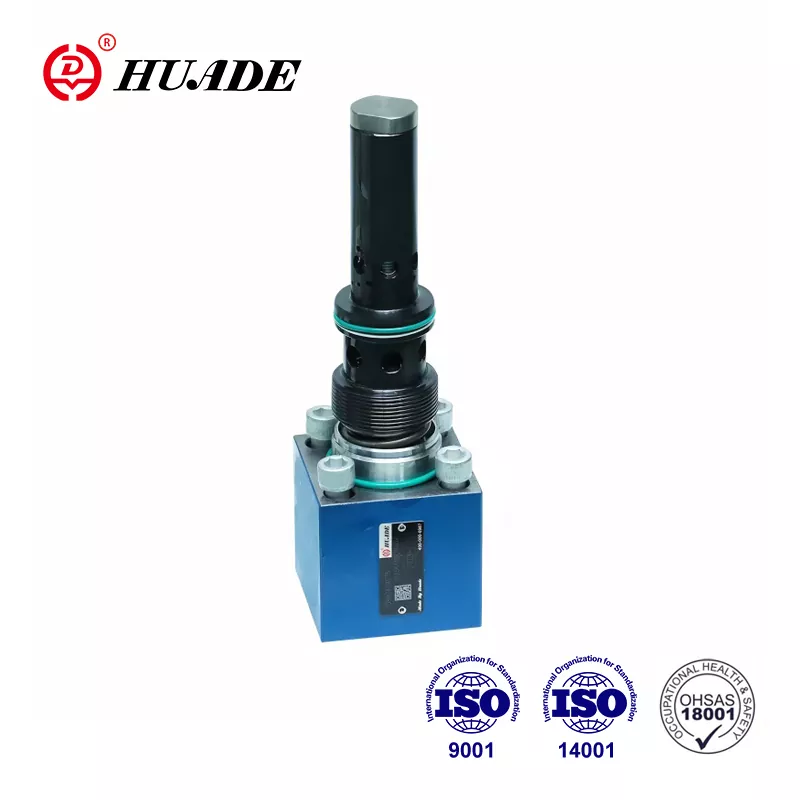
For complete selection guidelines and cross-reference documentation on this product line, please consult our flow control valve selection and application.
Imagine trying to fill a glass of water from a fire hose. Without a way to control the flow, you’d have water everywhere except in your glass. That’s exactly why hydraulic systems need flow control valves – they’re like the tap that lets you control how fast or slow fluid moves through the system.
What is a Hydraulic Flow Control Valve?
A hydraulic flow control valve is a mechanical device that controls the amount of hydraulic fluid flowing through a system. Think of it as a smart gate that can open wide for fast flow or nearly close for slow, precise movement.
These valves work by changing the size of the opening (called an orifice) that fluid passes through. When the opening is large, more fluid flows through. When it’s small, less fluid flows. It’s that simple!
Why Are Hydraulic Flow Control Valves Important?
Hydraulic flow control valves are the speed controllers of hydraulic systems. Here’s why they matter:
- Control Speed: They determine how fast hydraulic cylinders and motors move
- Save Energy: Proper flow control reduces waste and heat
- Improve Safety: They prevent dangerous rapid movements
- Increase Precision: They allow for smooth, controlled operations
How Do Hydraulic Flow Control Valves Work?
The Basic Science Behind Flow Control
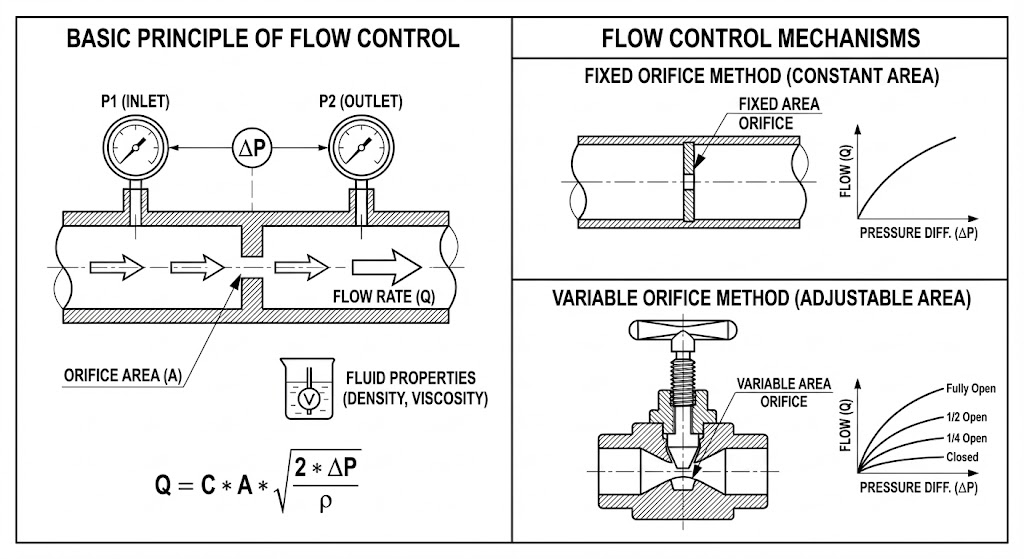
The operation of hydraulic flow control valves follows a simple physics principle. The flow rate depends on three main factors:
- Orifice Size: Bigger opening = more flow
- Pressure Difference: Higher pressure = faster flow
- Fluid Properties: Thicker fluid = slower flow
While this formula provides technical clarity for hydraulic valve sizing, understanding the core principles is usually sufficient for practical applications in most industrial hydraulic systems.
Flow Control Mechanisms in Hydraulic Systems
Fixed Orifice Method: Like a hole punched in a garden hose – the size never changes, so flow varies with pressure changes in the hydraulic circuit.
Variable Orifice Method: Like an adjustable nozzle on a hose – you can change the opening size to control flow dynamically in industrial hydraulic systems.
Types of Hydraulic Flow Control Valves
1. Non-Pressure Compensated Flow Control Valves
These are the simpler, less expensive options. They work like basic faucets – turn the handle to change the opening size.
Common Types:
- Needle Valves: Perfect for fine-tuning small flows
- Ball Valves: Great for quick on/off control
- Butterfly Valves: Good for large pipes and quick shutoff
Pros:
- Simple design
- Low cost
- Easy to understand and maintain
Cons:
- Flow changes when system pressure changes
- Less precise control
2. Pressure Compensated Flow Control Valves
These are the smart ones. They automatically adjust to keep flow steady even when pressure changes in the system.
How They Work:
Imagine a valve with a built-in pressure sensor that automatically adjusts the opening to maintain constant flow. When system pressure goes up, the valve opening gets smaller. When pressure drops, it opens wider.
Two Main Types:
Restrictor Type: Controls flow by adjusting the main orifice
- Best for constant speed applications
- Uses less energy than basic throttling
Bypass Type: Keeps priority flow constant, sends excess back to tank
- Most energy-efficient option
- Reduces heat generation
Pros:
- Consistent flow regardless of pressure changes
- Better energy efficiency
- More precise control
Cons:
- More complex design
- Higher initial cost
3. Proportional Flow Control Valves
These are the high-tech versions controlled by electrical signals. Think of them as the “smart home” version of flow control valves.
Features:
- Controlled by voltage or current signals
- Infinite adjustment possibilities
- Fast response time
- Can be computer-controlled
CNC Machines
Precision control for cutting operations
Industrial Robots
Automated movement control
Automated Manufacturing
Production line control systems
Aerospace Systems
Critical flight control applications
Real-World Applications: Where You’ll Find These Valves
Manufacturing and Industrial Equipment
CNC Machines: Hydraulic circuit flow control ensures cutting tools move at exactly the right speed for perfect cuts in precision manufacturing.
Injection Molding: These valves control how fast plastic flows into molds, preventing defects in automated production lines.
Hydraulic Presses: They manage the pressing speed to avoid damaging materials while maintaining consistent force application.
Construction and Heavy Equipment
Excavators: Multiple flow control valves coordinate the movement of the boom, arm, and bucket for smooth operation in construction sites.
Cranes: They ensure loads are lifted and lowered safely at controlled speeds, preventing dangerous swinging motions.
Bulldozers: Hydraulic valve sizing determines blade movement precision for accurate grading work.
Agricultural Machinery
Tractors: Flow control valves manage implement speeds for optimal field work, from plowing to harvesting operations.
Harvesters: They coordinate multiple functions like cutting, threshing, and cleaning in modern agricultural equipment.
Material Handling and Logistics
Forklifts: Precise hydraulic circuit flow control manages lifting and tilting speeds for safe load handling in warehouses.
Conveyor Systems: They regulate belt speeds for efficient material transport in distribution centers.
Loading Docks: Hydraulic levelers use flow control for smooth truck loading operations.
How to Choose the Right Hydraulic Flow Control Valve
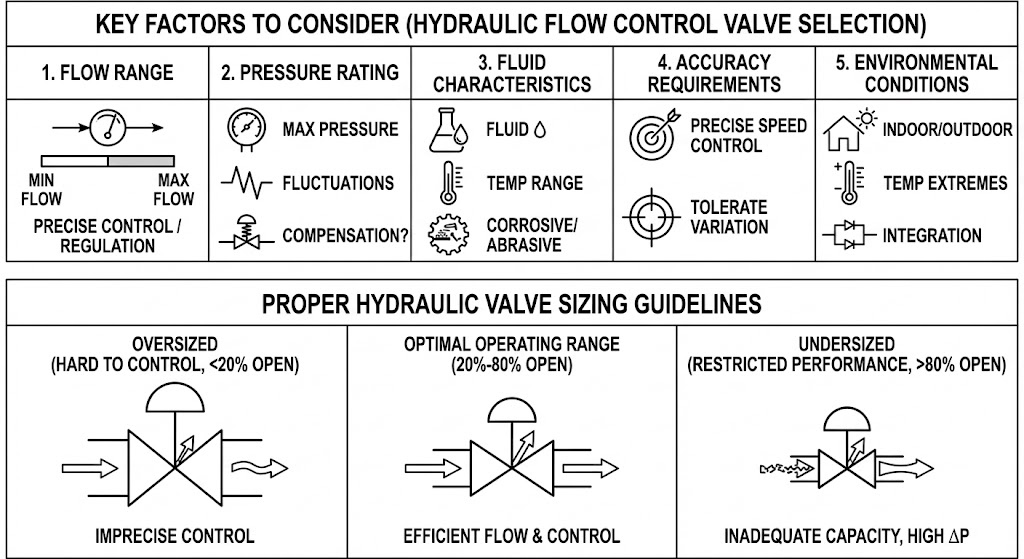
Key Factors to Consider
1. Flow Range Requirements
- What’s your minimum flow need?
- What’s your maximum flow need?
- Do you need precise control or just basic regulation?
2. Pressure Rating
- What’s your system’s maximum pressure?
- Do pressures fluctuate significantly?
- Do you need pressure compensation?
3. Fluid Characteristics
- What type of hydraulic fluid are you using?
- What’s the operating temperature range?
- Is the fluid corrosive or abrasive?
4. Accuracy Requirements
- Do you need precise speed control in your hydraulic circuit design?
- Can you tolerate some flow variation in industrial hydraulic systems?
- Is consistent performance critical for your application?
5. Environmental Conditions
- Indoor or outdoor installation requirements?
- Temperature extremes affecting hydraulic valve sizing?
- Integration with existing hydraulic circuit flow control systems?
Proper Hydraulic Valve Sizing Guidelines
The Golden Rule: Size your valve so it operates between 20% and 80% open for your normal flow range in industrial hydraulic systems.
Oversized Valves: Create control difficulties, similar to trying to write with a large paint brush – possible, but imprecise.
Undersized Valves: Restrict system performance, like attempting to fill a swimming pool through a drinking straw – inadequate flow capacity.
Maintenance and Troubleshooting
Common Problems and Solutions
Maintenance Best Practices
Keep Hydraulic Systems Clean: Maintain proper fluid cleanliness levels
- Use appropriate filtration for your hydraulic circuit design
- Change fluid according to manufacturer specifications
- Monitor contamination sources in industrial hydraulic systems
Regular System Inspection: Look for signs of wear or performance degradation
- Check for external leaks in hydraulic circuit flow control components
- Monitor performance changes over time
- Listen for unusual noises during operation
Preventive Maintenance Programs: Proactive approach to system reliability
- Follow manufacturer’s maintenance schedules for hydraulic valve sizing
- Maintain inventory of critical spare parts
- Train operators on proper system operation procedures
The Future of Hydraulic Flow Control Valves
Smart Technology Integration
Modern hydraulic systems are becoming smarter with:
- Built-in Sensors: Real-time flow and pressure monitoring
- Digital Controls: Computer-controlled valve operation
- Predictive Maintenance: Systems that warn before failures occur
Energy Efficiency Focus
New valve designs emphasize:
- Lower Pressure Drops: Reducing energy waste
- Variable Speed Drives: Matching pump output to demand
- Heat Recovery: Using waste heat productively
Miniaturization and Integration
Trends toward:
- Compact Designs: Smaller valves with same performance
- Integrated Systems: Combining multiple functions in one unit
- Modular Approaches: Easy customization and expansion
Conclusion: Making the Right Choice for Your Application
Hydraulic flow control valves are essential components that determine how well your industrial hydraulic systems perform. Whether you need simple, cost-effective flow control or precise, computer-controlled operation, understanding proper hydraulic valve sizing and selection ensures optimal system performance.
Key Takeaways:
- Begin with a thorough analysis of your flow and pressure requirements
- Consider pressure compensation for consistent performance in variable load applications
- Ensure proper hydraulic valve sizing – balanced between minimum and maximum flow needs
- Maintain clean hydraulic circuit flow control for reliable long-term operation
- Plan for future expansion and technology integration needs
Professional Recommendation: The optimal valve selection balances performance requirements, total cost of ownership, and long-term reliability. For complex applications or critical systems, consulting with experienced hydraulic engineers can help ensure proper hydraulic circuit design and component selection that meets both current and future operational requirements.