What Is a 3/8 Check Valve and Why Do You Need One?
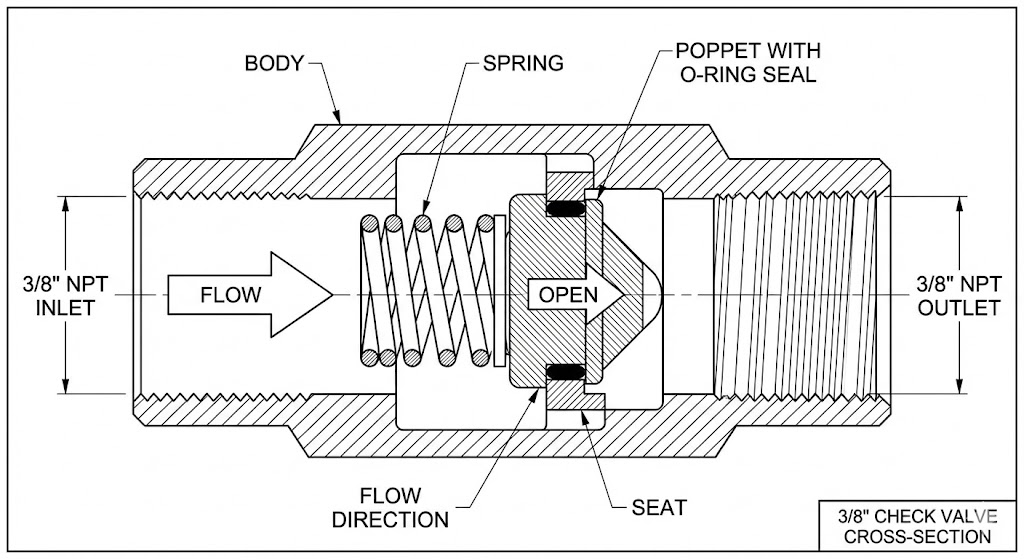
For complete selection guidelines and cross-reference documentation on this product line, please consult our Rexroth 4WE series directional control valve guide.
A 3/8 check valve is a small but mighty device that keeps fluids flowing in only one direction. Think of it like a one-way door for water, oil, or air in your pipes. When fluid tries to flow backward, the valve automatically slams shut to stop it.
The “3/8” refers to the pipe size – about 9.5 millimeters wide. This makes it perfect for smaller systems like home water lines, air compressors, and hydraulic equipment.
Here’s why you might need one:
- Prevents backflow that can damage pumps and equipment
- Stops water hammer (that loud banging noise in pipes)
- Protects your system from contamination
- Saves energy by preventing pumps from working backward
How Does a 3/8 Check Valve Actually Work?
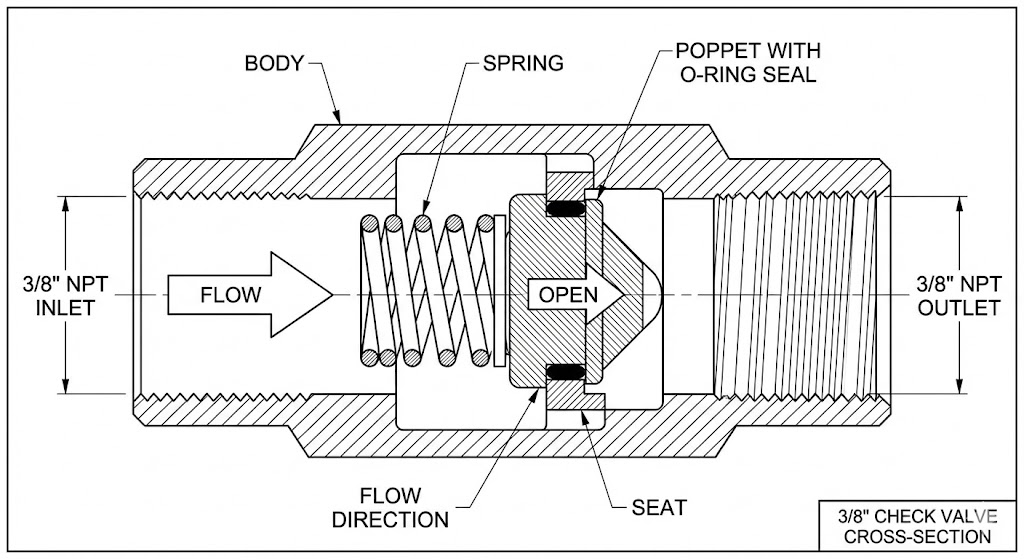
Check valves are surprisingly simple. They work automatically without any electricity or manual operation. Here’s the basic process:
When fluid flows forward:
- Pressure pushes against the valve disc or ball
- The valve opens to let fluid pass through
- Flow continues smoothly in the right direction
When fluid tries to go backward:
- Reverse pressure pushes the valve closed
- A spring or gravity helps keep it sealed tight
- No fluid can flow backward
The valve needs a small amount of pressure difference (called “cracking pressure”) to open – usually between 0.03 and 2.5 PSI for 3/8 inch valves.
Types of 3/8 Check Valves: Which One Is Right for You?
There are several designs, each with different strengths:
Spring-Loaded Ball Check Valves
- How it works: A spring-loaded ball moves up and down
- Best for: Can be installed in any direction
- Good for: Hydraulic systems, air compressors, general use
Swing Check Valves
- How it works: A hinged disc swings open and closed
- Best for: Low pressure drop, handles debris well
- Good for: Water supply lines, steam systems
Lift/Poppet Check Valves
- How it works: A disc lifts straight up to open
- Best for: Excellent sealing, high pressure applications
- Good for: High-pressure hydraulics, steam systems
Diaphragm Check Valves
- How it works: A flexible diaphragm bends to open
- Best for: Very low opening pressure, sanitary applications
- Good for: Water treatment, food processing, medical equipment
Materials Matter: Choosing the Right Construction
The material affects how long your valve lasts and what fluids it can handle:
Brass Check Valves ($8-$30)
- Good for: Water, air, light oils
- Temperature range: -30°F to 250°F
- Pressure rating: 200-400 PSI
- Avoid with: Saltwater, chlorinated water over time
Stainless Steel Check Valves ($25-$100)
- Good for: Most chemicals, high temperatures, food applications
- Temperature range: -4°F to 400°F+
- Pressure rating: 500-2,500 PSI
- 316 stainless steel is best for harsh chemicals and saltwater
Plastic Check Valves ($6-$15)
- Good for: Acids, bases, chlorinated water
- Temperature range: 32°F to 140°F (PVC) or 250°F (PVDF)
- Pressure rating: 100-300 PSI
- Lightest weight and most economical option
Key Specifications to Look For
When shopping for a 3/8 check valve, pay attention to these important numbers:
Flow Coefficient (Cv)
This tells you how much the valve restricts flow. Higher Cv = less pressure drop.
- Typical range for 3/8 valves: 0.8 to 3.3
- Rule of thumb: Choose Cv at least 20% higher than your calculated need
Pressure Ratings
- Working pressure: Normal operating pressure (300-2,500 PSI typical)
- Maximum pressure: Don’t exceed this or the valve could fail
- Choose: A valve rated at least 1.5 times your system pressure
Temperature Range
- Standard ranges: -30°F to 400°F depending on materials
- Consider: Both the fluid temperature and ambient conditions
Connection Types
| Connection Type | Common Region | Installation |
|---|---|---|
| NPT threads | North America | Most common |
| BSP threads | Europe and Asia | Common internationally |
| Compression fittings | Universal | Easy to install, no pipe threads needed |
Common Applications for 3/8 Check Valves
Home and Commercial Water Systems
- Well pump systems: Prevents water from draining back
- Hot water heaters: Stops thermal siphoning
- RO water filters: Maintains pressure in storage tanks
- Irrigation systems: Prevents backflow contamination
Hydraulic and Pneumatic Equipment
- Pump discharge lines: Protects pumps from reverse flow
- Hydraulic cylinders: Prevents “drift” when stopped
- Air compressor tanks: Keeps compressed air from escaping
Industrial Applications
- Chemical processing: Prevents cross-contamination
- HVAC systems: Controls refrigerant flow direction
- Steam systems: Prevents condensate backflow
Installation Tips for Best Performance
Proper Orientation
- Flow direction: Arrow on valve body shows correct direction
- Position: Most work in any position, but check manufacturer specs
- Vertical installation: Some designs need flow going upward
Piping Requirements
- Straight pipe upstream: 5 pipe diameters minimum
- Straight pipe downstream: 10-15 pipe diameters when possible
- Clean system: Flush pipes before installing valve
Common Installation Mistakes
- Wrong flow direction: Will completely block flow
- Overtightening: Can crack valve body or strip threads
- No pipe support: Vibration can cause premature failure
Troubleshooting Common Problems
Valve Won’t Open (No Flow)
- Check flow direction: Make sure arrow points right way
- Increase pressure: Valve may need more pressure to crack open
- Clean valve: Debris might be blocking the disc or ball
Valve Leaks When Closed
- Worn seals: Replace O-rings or valve internals
- Debris on seat: Flush system and clean valve
- Wrong pressure: Some valves need back pressure to seal properly
Water Hammer or Banging Noises
- Valve closing too slowly: Switch to spring-loaded design
- Wrong size: Valve may be too large for flow rate
- Add water hammer arrestor: Absorbs pressure spikes
Valve Chatters or Vibrates
- Flow too low: Valve is oversized for application
- Turbulent flow: Add straight pipe upstream
- Pressure fluctuations: Check for pump problems
Where to Buy and What to Expect to Pay
Online Retailers
- McMaster-Carr: Wide selection, detailed specs, $20-$40 typical
- Amazon: Convenient, but verify specifications carefully
- Grainger: Industrial focus, good for bulk orders
Specialty Valve Distributors
- Swagelok: Premium quality, $30-$50 range
- Valworx: Good mid-range option, $25-$65
- Local hydraulic shops: Often provide installation advice
| Type | Price Range | Best For |
|---|---|---|
| Basic plastic/brass | $6-$25 | Home applications, low pressure |
| Standard stainless steel | $25-$60 | Industrial use, moderate pressure |
| High-pressure/specialty | $60-$100+ | Heavy industrial, chemical processing |
Maintenance and Longevity
Regular Checks
- Visual inspection: Look for leaks, cracks, or corrosion every 6 months
- Function test: Verify valve opens and closes properly
- Pressure test: Check that system holds pressure when pump stops
When to Replace
- Visible damage: Cracks, severe corrosion, or deformed housing
- Poor performance: Won’t open at normal pressure or leaks when closed
- Age: Most valves last 5-10 years with proper maintenance
Extending Life
- Use strainers: Filter debris before it reaches the valve
- Proper sizing: Don’t oversize – it causes problems
- Quality installation: Good pipe support reduces stress
Making the Right Choice for Your Application
For Home Water Systems
Recommendation: Brass spring-loaded ball valve
- Why: Reliable, affordable, works in any position
- Price range: $15-$30
- Where to buy: Hardware stores, plumbing suppliers
For Industrial/Commercial Use
Recommendation: 316 stainless steel lift or ball valve
- Why: Durable, handles chemicals, high pressure rating
- Price range: $40-$80
- Where to buy: Industrial suppliers, online specialists
For Budget-Conscious Applications
Recommendation: PVC or brass swing valve
- Why: Lowest cost, adequate for many uses
- Price range: $6-$20
- Where to buy: General retailers, online marketplaces
The Bottom Line
A 3/8 check valve might be small, but it plays a big role in keeping your fluid systems working safely and efficiently. The key is matching the valve type and materials to your specific application.
Quick selection guide:
- Water systems: Brass with EPDM seals
- Chemical applications: Stainless steel or plastic
- High pressure: Stainless steel lift or poppet design
- Low pressure/cost: Plastic swing or diaphragm valve
Remember that buying the cheapest option isn’t always the best value. A quality valve that lasts 10 years costs less over time than replacing a cheap valve every 2 years.
Take time to measure your system pressure, identify your fluid type, and determine the right connection size. When in doubt, consult with a valve supplier who can help you choose the best option for your specific needs.
Your system will thank you with years of reliable, trouble-free operation.