For complete selection guidelines and cross-reference documentation on this product line, please consult our solenoid directional control valve equivalent.
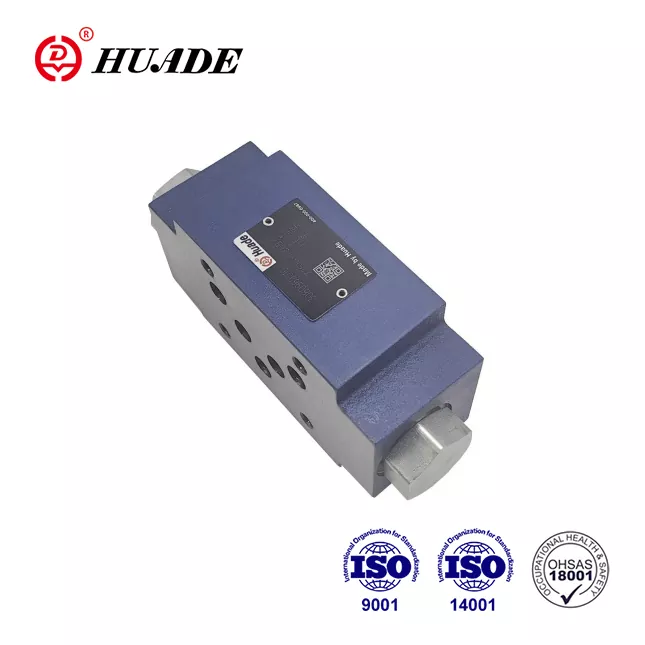
Have you ever wondered why water doesn’t flow backward in your home pipes? Or how gas stations prevent fuel from flowing back into their storage tanks? The answer lies in two important devices: check valves and non-return valves.
If you’re confused about these terms, you’re not alone. Many people think these are two different types of valves. But here’s the truth: check valves and non-return valves are the same thing. They just have different names depending on where you live or what industry you work in.
Let’s dive deep into this topic and clear up all the confusion once and for all.
The Simple Truth: They’re the Same Thing
A check valve and a non-return valve do exactly the same job. Both devices allow liquid or gas to flow in only one direction. When fluid tries to flow backward, these valves automatically close to stop it.
Why Different Names?
The different names come from:
- Geography: Different countries prefer different terms
- Industries: Some fields use specific names
- Standards: Technical organizations use their preferred terms
Here’s a quick breakdown:
| Term | Where It’s Used | Common Industries |
|---|---|---|
| Check Valve | USA, Global standards | Oil & gas, chemical, general industry |
| Non-Return Valve | UK, India, South Africa | Water treatment, municipal systems |
| Reflux Valve | Australia, New Zealand | Wastewater, plumbing |
| One-Way Valve | Everywhere | General description |
How Do These Valves Work?
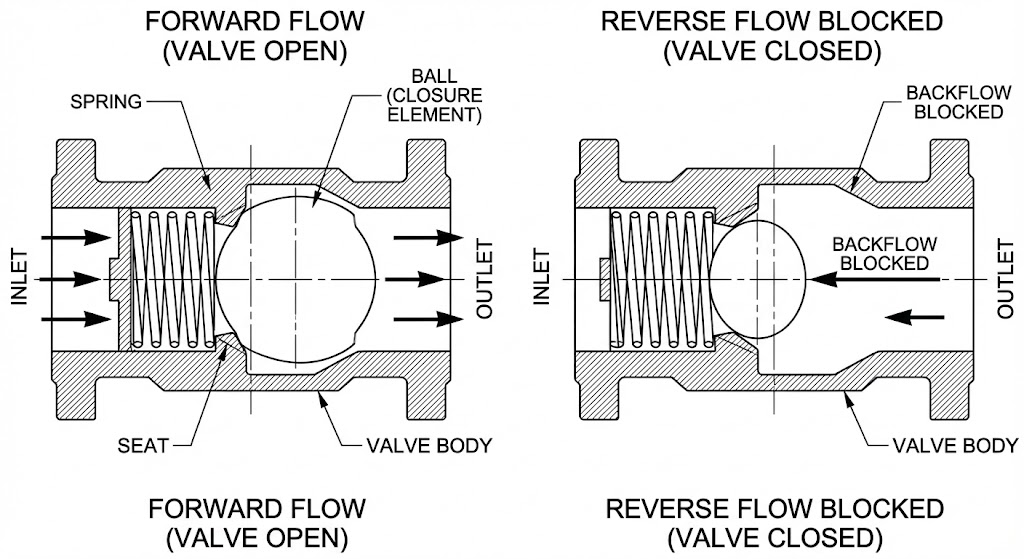
Understanding how check valves work is pretty simple. Here’s the basic process:
When Fluid Flows Forward
- Pressure builds up behind the valve
- This pressure pushes the valve open
- Fluid flows through freely
- The valve stays open as long as pressure continues
When Fluid Tries to Flow Backward
- The forward pressure stops or reverses
- The valve element (like a disc or ball) falls back into place
- This seals the opening completely
- No fluid can flow backward
The whole process happens automatically. No electricity, no computer control, no human operation needed. It’s purely mechanical and powered by the fluid itself.
Key Parts of the System
- Valve body: The main housing
- Closure element: The part that opens and closes (disc, ball, or flap)
- Seat: Where the closure element seals against
- Spring (in some types): Helps the valve close faster
Types of Check Valves (Non-Return Valves)
There are many different designs, each perfect for specific situations. Let’s look at the most common types:
1. Swing Check Valve
- How it works: A disc swings open and closed like a door
- Best for: Large pipes with steady flow
- Pros: Low pressure loss, simple design
- Cons: Takes up more space, not good for stop-and-go flow
2. Lift Check Valve
- How it works: A disc or ball lifts straight up to open
- Best for: High-pressure systems
- Pros: Strong sealing ability
- Cons: Higher pressure loss, more wear over time
3. Ball Check Valve
- How it works: A ball moves up and down to open and close
- Best for: Small pipes, simple applications
- Pros: Self-cleaning, easy to understand
- Cons: Not good for thick fluids or dirty water
4. Wafer Check Valve
- How it works: Thin design that fits between pipe flanges
- Best for: Tight spaces, medium-sized pipes
- Pros: Compact, lightweight, low cost
- Cons: Not as stable in high-flow situations
5. Silent Check Valve
- How it works: Special design that closes quietly
- Best for: Buildings, hospitals, quiet environments
- Pros: Reduces noise and water hammer
- Cons: More complex, higher cost
Where Are These Valves Used?
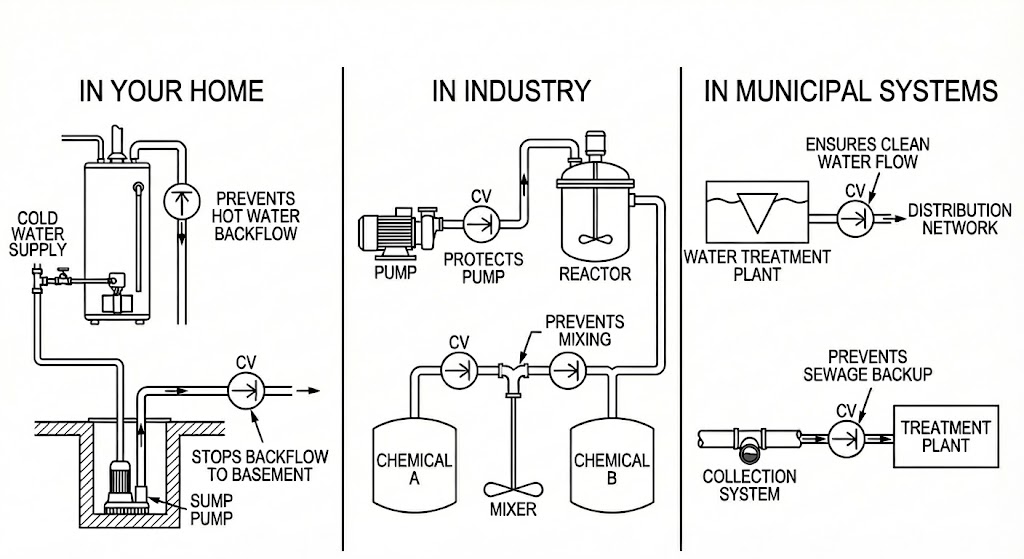
Check valves (non-return valves) are everywhere, even if you don’t see them. Here are the main places they’re used:
In Your Home
- Water heaters: Prevent hot water from flowing back
- Sump pumps: Stop water from flowing back into the basement
- Toilets: Keep clean water separate from waste water
- Faucets: Prevent contaminated water from entering clean supply
In Industry
- Oil refineries: Protect expensive pumps and equipment
- Chemical plants: Prevent dangerous mixing of different chemicals
- Power plants: Control steam and cooling water flow
- Food processing: Keep products clean and safe
In Municipal Systems
- Water treatment plants: Ensure clean water stays clean
- Sewage systems: Prevent backup of waste water
- Fire protection: Keep water pressure in emergency systems
- Irrigation: Control water flow in farming systems
Why Are These Valves So Important?
Check valves might seem simple, but they prevent serious problems:
Equipment Protection
Without these valves, pumps could spin backward and break. Motors could burn out. Expensive machinery could be damaged beyond repair.
Safety
In chemical plants, check valves prevent dangerous chemicals from mixing. In water systems, they prevent contaminated water from entering clean supplies.
Efficiency
These valves prevent wasted energy. Without them, fluids would flow backward, and systems would have to work harder to maintain pressure.
Water Hammer Prevention
When fluid suddenly stops or changes direction, it can create powerful pressure waves called “water hammer.” This can burst pipes and damage equipment. Many check valves help reduce this problem.
How to Choose the Right Valve
Selecting the right check valve depends on several factors:
Fluid Type
- Clean water: Almost any type works
- Dirty water: Ball or diaphragm types work best
- Chemicals: Need special materials that won’t corrode
- High temperature: Require heat-resistant materials
System Pressure
- Low pressure: Swing or wafer types work well
- High pressure: Lift or spring-loaded types are better
- Variable pressure: Fast-closing types prevent problems
Pipe Size
- Small pipes (under 2 inches): Ball or wafer types
- Medium pipes (2-12 inches): Wafer or dual-plate types
- Large pipes (over 12 inches): Swing types usually work best
Flow Rate
- Steady flow: Swing types have lowest pressure loss
- Stop-and-go flow: Spring-loaded types respond faster
- High-speed flow: Need valves that prevent water hammer
Common Problems and Solutions
Even the best check valves can have issues. Here are the most common problems and how to fix them:
Chattering
- Problem: Valve makes noise and vibrates
- Causes: Flow rate too low, valve too big, loose parts
- Solutions: Adjust flow, resize valve, tighten connections
Water Hammer
- Problem: Loud banging sounds in pipes
- Causes: Valve closes too slowly, high-speed flow changes
- Solutions: Use faster-closing valve, add surge protection
Sticking
- Problem: Valve won’t open or close properly
- Causes: Dirt, corrosion, worn parts
- Solutions: Clean valve, replace worn parts, use better materials
Leaking
- Problem: Fluid flows backward when it shouldn’t
- Causes: Damaged seal, debris on seat, worn disc
- Solutions: Replace seals, clean seat, replace disc
Maintenance Tips
Taking care of check valves is important for system reliability:
Regular Inspection
- Check for leaks every month
- Listen for unusual noises
- Monitor system pressure
Cleaning
- Remove debris from strainers upstream
- Clean valve internals during shutdowns
- Use appropriate cleaning chemicals
Testing
- Test valve operation quarterly
- Check for proper opening and closing
- Verify no backward flow occurs
Replacement Planning
- Keep spare parts in stock
- Plan replacement during scheduled shutdowns
- Use quality parts from reputable suppliers
Industry Standards and Regulations
Different industries have specific standards for check valves:
American Standards
- API 594: Check valve design and testing
- ASME B16.34: Valve materials and pressure ratings
- API 598: Valve testing procedures
International Standards
- ISO 5175: Safety devices for gas systems
- BS EN 13959: Backflow prevention for water
- NACE MR0175: Materials for corrosive environments
Why Standards Matter
Standards ensure that valves are:
- Safe to use
- Compatible with other equipment
- Tested to proven methods
- Reliable in critical applications
Cost Considerations
When buying check valves, consider the total cost, not just the purchase price:
Initial Cost
- Simple ball valves: $10-$100
- Standard swing valves: $50-$500
- High-performance silent valves: $200-$2000
- Specialty chemical valves: $500-$5000+
Operating Costs
- Energy loss from pressure drop
- Maintenance and repair costs
- Replacement frequency
- System downtime costs
Money-Saving Tips
- Choose the right size to minimize pressure loss
- Use quality materials to reduce replacement frequency
- Implement preventive maintenance
- Consider total system efficiency
Future Trends
Check valve technology continues to improve:
Smart Valves
New valves include sensors that monitor:
- Flow rates
- Pressure conditions
- Valve position
- Wear conditions
Better Materials
Advanced materials provide:
- Longer service life
- Better chemical resistance
- Reduced maintenance needs
- Higher temperature capability
Improved Designs
New designs focus on:
- Faster response times
- Lower pressure losses
- Quieter operation
- Easier maintenance
Conclusion
Now you know the truth: check valves and non-return valves are exactly the same thing. The different names simply come from different regions, industries, or standards organizations.
These simple but crucial devices:
- Allow fluid to flow in only one direction
- Automatically prevent backflow
- Protect equipment and ensure safety
- Work in countless applications worldwide
Whether you call them check valves, non-return valves, reflux valves, or one-way valves, they all do the same essential job. Understanding how they work and choosing the right type for your application can save money, prevent problems, and keep systems running smoothly.
The next time you turn on a faucet, start your car, or flip a light switch, remember that check valves are quietly working behind the scenes to make it all possible. These humble devices might not get much attention, but modern life wouldn’t be the same without them.